Ankle Ligament Reconstruction Surgery Recovery and Return to Sport
After a Broström repair, 95% of patients return to sport, on average in about 12 weeks. A week-by-week recovery guide, with what suture tape and arthroscopy add.
Medically reviewed by Dr. Efe Ozturk · Last reviewed
Published 5 min read
Most sprains heal without surgery. When the ankle keeps rolling despite months of rehabilitation, or when a severe sprain comes with other injuries such as cartilage damage or a torn tendon, surgery to repair or rebuild the ligaments may be needed.[3] For the condition, see chronic ankle instability. This article covers what happens after the operation: ankle ligament reconstruction recovery, week by week, and how and when people get back to sport.
What results can you expect from ankle ligament reconstruction surgery?
The numbers are strong.
- Return to sport. In the review of 25 studies, 95% returned to some sport and 87% returned to competitive sport.[1]
- Athletes do well. Professional and competitive athletes returned at a higher rate (93%) than recreational athletes (83%).[1] In 343 professional athletes who had surgery for severe ligament tears, 89% returned to their pre-injury level, on average about 16 weeks after surgery.[4]
- Durable repairs. The revision rate was 1.2% at an average of 8.4 years.[2]
- Choice of method did not change return to sport. Arthroscopic or open surgery, repair or reconstruction, and early or late weight-bearing all gave similar return-to-sport rates.[1]
For the operation itself, see ankle ligament reconstruction.
Ankle ligament reconstruction recovery, week by week
After surgery, the ankle is usually protected in a cast or boot. Follow your surgeon’s instructions closely, because moving or loading the ankle too early can tear the repair. Rehabilitation then restores strength, motion and balance, and it can take weeks to months.[3]
| Stage | What usually happens | What matters most |
|---|---|---|
| First 2 to 3 weeks | A splint, cast or boot protects the repair. Early-motion plans start gentle movement within 3 weeks. | Protecting the repair and controlling swelling. |
| Weeks 3 to 6 | In many plans, weight and motion increase in a boot or brace. | Following your plan exactly. |
| Weeks 6 to 12 | Strength and balance therapy. In one suture-tape series, 96% could hop on the operated leg at 6 weeks. | Balance and calf strength. |
| Months 3 to 4 | Average return to sport was about 12 weeks across studies, and about 16 weeks in professional athletes. | Sport-specific drills before full play. |
| Months 4 to 12 | Satisfaction stayed high for up to 4 years in one series. | Keeping up balance work. |
Sources for the table: patient guidance on ankle sprains, a review of early versus delayed movement, a suture-tape series and the return-to-sport reviews.[3,5,6,1,4]
When can I walk after Broström surgery?
It depends on your repair and your surgeon. Some plans protect the ankle for several weeks. Others allow full weight right away: in one matched study after arthroscopic repair, an accelerated plan with immediate full weight-bearing and early strength and balance work gave function scores similar to a standard plan, with no recurrences.[7]
Does suture-tape augmentation speed recovery?
Suture tape, sometimes called an internal brace, is a strong tape anchored to the bone alongside the repaired ligament. It is meant to protect the repair while it heals.[8] Some surgeons add it, especially for active patients.
- A faster return in some studies. A 2026 review of 13 studies with 1,015 patients found better sports-function scores with suture tape. In the two studies that reported it, people returned to sport 4 to 8 weeks sooner.[9]
- No cast needed in one trial. In a randomized trial of 61 patients, the suture-tape group needed no cast or brace right after surgery, which allowed early rehabilitation, and scored higher on sports activity (90 vs. 85 out of 100).[10]
- Early rehabilitation held up. In 93 military patients with suture tape and an accelerated plan, 96% could hop on one leg at 6 weeks, and no repair failed.[6]
Arthroscopic or open Broström?
The repair can be done through an open incision or through small incisions with a camera (arthroscopy). A 2026 review of 21 studies with 1,426 patients found less pain, higher function scores and a quicker return to daily work after arthroscopic repair than after open repair.[11] Return-to-sport rates were similar either way.[1] Arthroscopy also lets the surgeon look inside the joint and treat other problems. See ankle arthroscopy.
Why see a Foot and Ankle Surgeon early?
Over time, an unstable ankle can damage the bones and cartilage, and a severe sprain can come with other injuries, such as a torn tendon, that can be a reason for surgery.[3] An evaluation by a surgeon sorts out what is loose and what else is injured. If your sprain still isn’t right, read why an ankle sprain may not be healing.
What are the limits?
Starting movement within 3 weeks gave better function scores, but also looser ankles on testing and more complications (11.4% vs. 3.1%) than starting later.[5] Each decade of age raised the risk of not returning to sport by 6%, a higher body mass index also lowered the chance, and recreational athletes returned less often than competitive ones.[1] An earlier review of 4 studies found no difference between suture tape and a standard repair in recurrence, function or complications.[8] In the randomized trial, overall foot scores and daily-life function were the same with or without tape.[10] After accelerated rehabilitation, people whose ligament looked poor on MRI before surgery had a higher risk of a weaker recovery.[7] Most of this evidence comes from studies that looked back at past patients rather than large randomized trials.[1,11]
Common questions
How long is recovery after ankle ligament reconstruction surgery?
Rehabilitation takes weeks to months.[3] Across studies, the average return to sport was about 12 weeks.[1]
When can I return to sport after a Broström repair?
On average about 12 weeks, and about 16 weeks in professional athletes, once strength and balance allow.[1,4]
Is ankle ligament surgery worth it?
For an ankle that keeps giving way, the results are strong: 95% returned to sport and only 1.2% needed revision years later.[1,2]
Is suture tape better than a standard Broström repair?
It may speed the return to sport and improve sports function. One earlier review found no clear difference, so ask whether it suits your ankle.[9,8]
The bottom line
A Broström repair can turn an ankle you can’t trust into one that holds, and most people return to sport within months. Dr. Ozturk is a double board certified Foot and Ankle Surgeon and podiatrist who sees patients in Lyndhurst, Paramus and Millburn. Our parent practice explains why an ankle keeps rolling (external site), or you can request an appointment.
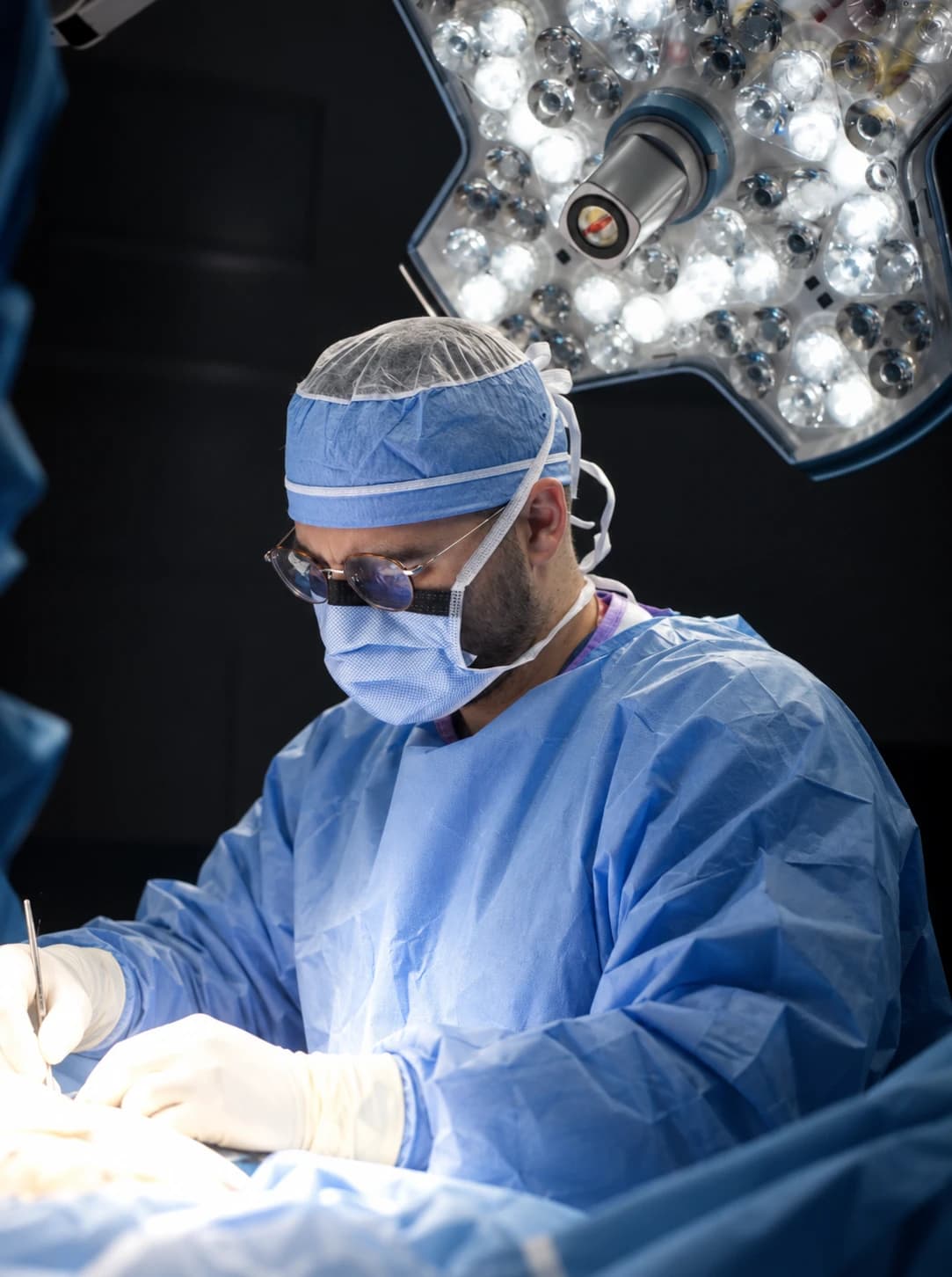
Reviewing surgeon
Foot and Ankle Surgeon at Center for Lower Extremity Surgery, a specialty practice of Ozturk Foot & Ankle. Dr. Ozturk is double board certified, as a Diplomate of the American Board of Podiatric Medicine (DABPM) and a Fellow of the Academy of Physicians in Wound Healing (FAPWH), and is a Fellow of the American Society of Podiatric Surgeons (FASPS) and the American Society of Podiatric Medicine (FASPM).
References
- 1.Li Y, Su T, Hu Y, et al. Return to Sport After Anatomic Lateral Ankle Stabilization Surgery for Chronic Ankle Instability: A Systematic Review and Meta-analysis. Am J Sports Med. 2024;52(2):555-566. PubMed 37252803 (external site)
- 2.So E, Preston N, Holmes T. Intermediate- to Long-Term Longevity and Incidence of Revision of the Modified Broström-Gould Procedure for Lateral Ankle Ligament Repair: A Systematic Review. J Foot Ankle Surg. 2017;56(5):1076-1080. PubMed 28645550 (external site)
- 3.American Academy of Orthopaedic Surgeons. Sprained Ankle. OrthoInfo. orthoinfo.org (external site)
- 4.Goru P, Talha S, Majeed H. Outcomes and Return to Sports Following the Ankle Lateral Ligament Reconstruction in Professional Athletes: A Systematic Review of the Literature. Indian J Orthop. 2022;56(2):208-215. PubMed 35140851 (external site)
- 5.Vopat ML, Tarakemeh A, Morris B, et al. Early Versus Delayed Mobilization Postoperative Protocols for Lateral Ankle Ligament Repair: A Systematic Review and Meta-analysis. Orthop J Sports Med. 2020;8(6):2325967120925256. PubMed 32613020 (external site)
- 6.Martin KD, Andres NN, Robinson WH. Suture Tape Augmented Broström Procedure and Early Accelerated Rehabilitation. Foot Ankle Int. 2021;42(2):145-150. PubMed 33019806 (external site)
- 7.Zeng C, Sun N, Wei Y, Jiang F, Liu Y, Guo H. Accelerated Rehabilitation after Arthroscopic ATFL Repair for CLAI: Propensity-Matched Cohort Study. Foot Ankle Int. 2025;46(12):1405-1414. PubMed 41094373 (external site)
- 8.Li H, Zhao Y, Chen W, Li H, Hua Y. No Differences in Clinical Outcomes of Suture Tape Augmented Repair Versus Broström Repair Surgery for Chronic Lateral Ankle Instability. Orthop J Sports Med. 2020;8(9):2325967120948491. PubMed 32974410 (external site)
- 9.Li X, Wei Z, Cao Y, et al. Internal brace augmentation versus modified Broström-Gould procedure for chronic lateral ankle instability: a systematic review and meta-analysis of functional and radiographic outcomes. J Orthop Surg Res. 2026;21(1):595. PubMed 42469828 (external site)
- 10.Ulku TK, Kocaoglu B, Tok O, Irgit K, Nalbantoglu U. Arthroscopic suture-tape internal bracing is safe as arthroscopic modified Broström repair in the treatment of chronic ankle instability. Knee Surg Sports Traumatol Arthrosc. 2020;28(1):227-232. PubMed 31197389 (external site)
- 11.Cho T, Jones C, Chaudry S, Liu J. Meta-analysis of surgical approaches to lateral ankle instability: Open Broström versus arthroscopic Broström versus lasso-loop repair. J Orthop. 2026;74:323-331. PubMed 41685056 (external site)
This article is general health information and isn’t a substitute for advice from a clinician who knows your history. Read our medical disclaimer and how we review content.
Learn more about this
Treatment
Ankle ligament surgery
Tightening or rebuilding the outer ankle ligaments so an unstable ankle stops giving way.
Condition
Chronic ankle instability
An ankle that repeatedly gives way or rolls, usually after a sprain that never fully recovered.
Treatment
Ankle arthroscopy
A camera-guided operation through tiny incisions to look inside the ankle and treat impingement, loose bodies and cartilage injuries.
Treatment
Recovery after surgery
Weight-bearing, swelling, timelines by operation, driving, work and the warning signs to watch for.
Keep reading
Ankle
Ankle Sprain Not Healing? What Else It Could Be
Most sprains settle. When yours has not, the cause may be more than a stretched ligament. Here are the usual explanations and how they are sorted out.
6 min read
Before and after surgery
When Can I Drive After Foot or Ankle Surgery?
The answer depends on which foot was operated on, what you are wearing and what you are taking. What research on braking shows, and how to decide.
6 min read
Before and after surgery
How to Prepare for Foot and Ankle Surgery: A Checklist
A practical checklist for the weeks before surgery: your health review, the risks you can change, setting up your home, and what to bring.
7 min read
On the Ozturk Foot & Ankle blog
General foot care and non-surgical basics, from our parent practice.