How to Prepare for Foot and Ankle Surgery: A Checklist
A practical checklist for the weeks before surgery: your health review, the risks you can change, setting up your home, and what to bring.
Medically reviewed by Efe Ozturk, DPM · Last reviewed
Published 7 min read
An operation on the foot or ankle is usually scheduled ahead, and the weeks before it are your main chance to influence how it goes. Below is a checklist in the order things tend to happen. It is general guidance. The instructions from your surgeon and the anesthesia team for your operation always take priority. The companion guide to preparing for foot and ankle surgery goes deeper on each topic.
Before you commit to a date
You should be able to answer five questions in your own words:
- What exactly will be done, and why is it recommended for my foot?
- What are the other choices, including leaving things as they are?
- What result is realistic, and what could go wrong?
- What will recovery ask of me and of the people at home?
- Who do I call if something worries me afterward?
If any of these is still fuzzy, ask before scheduling. A second opinion is a normal step for a large elective operation; see second opinions before foot or ankle surgery.
The health review
Expect a pre-operative visit at which the team goes through your history, your allergies and everything you take, and looks for conditions that could complicate anesthesia or wound healing: diabetes, heart, lung or kidney disease, poor circulation, or earlier blood clots. Depending on your age and health, you might be sent back to your regular doctor for clearance, or asked for blood work or an electrocardiogram.
Your surgeon and the anesthesia team decide which medicines you keep taking and which you pause. Never adjust a prescription by yourself. Keep a written list of medicines and supplements, including over-the-counter products, and bring it to each visit.
The risks you can change
These are the ones with the clearest evidence.
- Smoking. A systematic review of foot and ankle surgery found that smoking, smokeless tobacco included, raised the risk of complications: bones that failed to join, infected wounds and slow bone healing were all more frequent in smokers than in non-smokers.[1] Ask us for help with quitting before an elective operation.
- Diabetes and blood sugar. One prospective series followed 1,465 foot and ankle operations by a single surgeon and counted wound infections in 9.5% of patients with diabetes against 2.4% of those without. Nerve damage, rather than diabetes as such, was the strongest predictor.[2] In a second series of 2,060 operations, patients whose diabetes had caused complications had roughly seven times the infection risk of patients with neither diabetes nor neuropathy.[3] A Veterans Affairs database of 21,854 people with diabetes found that every 1% rise in hemoglobin A1c raised the odds of a complication by 5%, with neuropathy and other diabetes-related illness weighing more heavily.[4] Your surgeon may want better control before an elective procedure and may involve your diabetes doctor. Operations for infection or a broken bone can’t be delayed, so they go ahead with a plan built around your condition. See smoking, diabetes and foot surgery healing.
- General health. Eating well, keeping blood pressure and other conditions in check, and getting skin problems on the foot treated all support healing.
If you develop a cut, rash, infection or a cold shortly before the operation, tell the office. Postponing can be the safer choice.
Pain control and anesthesia
The anesthesia team will recommend an option for you: often a nerve block (sometimes placed with ultrasound) combined with sedation, or a spinal or general anesthetic. Current pain plans pair blocks with non-opioid medicines and sometimes an added drug such as dexamethasone, so pain is controlled with fewer opioids.[5] A meta-analysis of five randomized trials found that a continuous block behind the knee gave lower pain scores at 24 and 48 hours than one injection, at the price of minor problems with the pump, such as leaks.[6]
The practical point: take your first dose of pain medicine before the block fades. Numbness can vanish quickly and the pain arrives with it, so follow the timetable you were handed.
Ask about blood clots
Clots in the veins of the leg are a known hazard of lower-limb surgery, particularly when the leg is held still. After foot and ankle operations they are uncommon overall. They are likelier after Achilles surgery and injuries, and in people who have had clots before, weigh more, are older or have certain illnesses.[7] A review of 20,043 operations below the knee found symptomatic clots in 2.5% of patients.[8] Nobody agrees on exactly who should receive preventive treatment, so it is decided case by case; ask what the plan is for you.[9]
Set up the house
- Getting around. Agree on crutches, a walker, a knee scooter or a wheelchair with your surgeon, and try the device before the operation.
- Resting place. Create a spot where the foot can stay raised, with water, phone, medicines and snacks in reach.
- Bathroom and bedroom. Decide how you will shower and where you will sleep. A shower chair and a waterproof cover for the dressing can make a big difference.
- People. Line up help for the first few days and a ride home, since you can’t drive yourself.
- Work and family. Arrange time off, tell your employer what your job involves, and plan for anyone who depends on you.
- Shoes. Have a roomy shoe for the other foot ready, and expect to wait before the operated foot fits one.
The bunion surgery recovery timeline and driving after foot or ankle surgery help you plan how long these arrangements will last.
The last day or two, and the morning itself
- Fasting. The office will give you an arrival time and tell you when to stop eating and drinking. Stick to it exactly, because a snack or a drink at the wrong time can cancel the operation.
- Pack: photo identification, your insurance card, your medicine list, and a contact for the adult who is taking you home.
- Wear something loose and comfortable, and leave valuables and jewelry behind.
- Where: the operation takes place at a hospital or surgery center where Dr. Ozturk has privileges, and most patients leave the same day.
Questions for your pre-operative visit
- Which of my medicines should I continue, and which should I pause?
- What type of anesthesia and pain plan do you suggest?
- Am I more likely than most to get an infection or a clot, and what will we do about it?
- When may I put weight on the foot, and what will I use to move around?
- Whom do I call about a problem, day or night?
Common questions
Should I stop smoking before surgery?
Yes, if you can, and ask us for help. Smokers had more infected wounds, more bones that failed to join and slower bone healing in the review.[1]
Will I need medical clearance?
That depends on your age and health. Some people are asked to see their own doctor or to have blood work or an electrocardiogram. Whatever tests are ordered, don’t change a medicine unless the team tells you to.
Will I be given a blood thinner?
There is no agreed rule for foot and ankle surgery, so your surgeon weighs your personal risk.[9,7]
If I have a nerve block, will I feel anything?
The foot and leg go numb for many hours, but pain can return abruptly when the block ends, so take your medicine on schedule. In one meta-analysis a continuous block lowered pain scores at 24 and 48 hours.[6]
What if I catch a cold or cut my foot before the date?
Call the office. A break in the skin, an infection or an illness close to surgery can be a reason to delay.
The bottom line
The basics carry most of the weight: understand the plan, have your health reviewed, stop smoking, tighten diabetes control if it applies, arrange pain control and get the house ready. Ask questions early and follow the fasting and medicine instructions exactly.
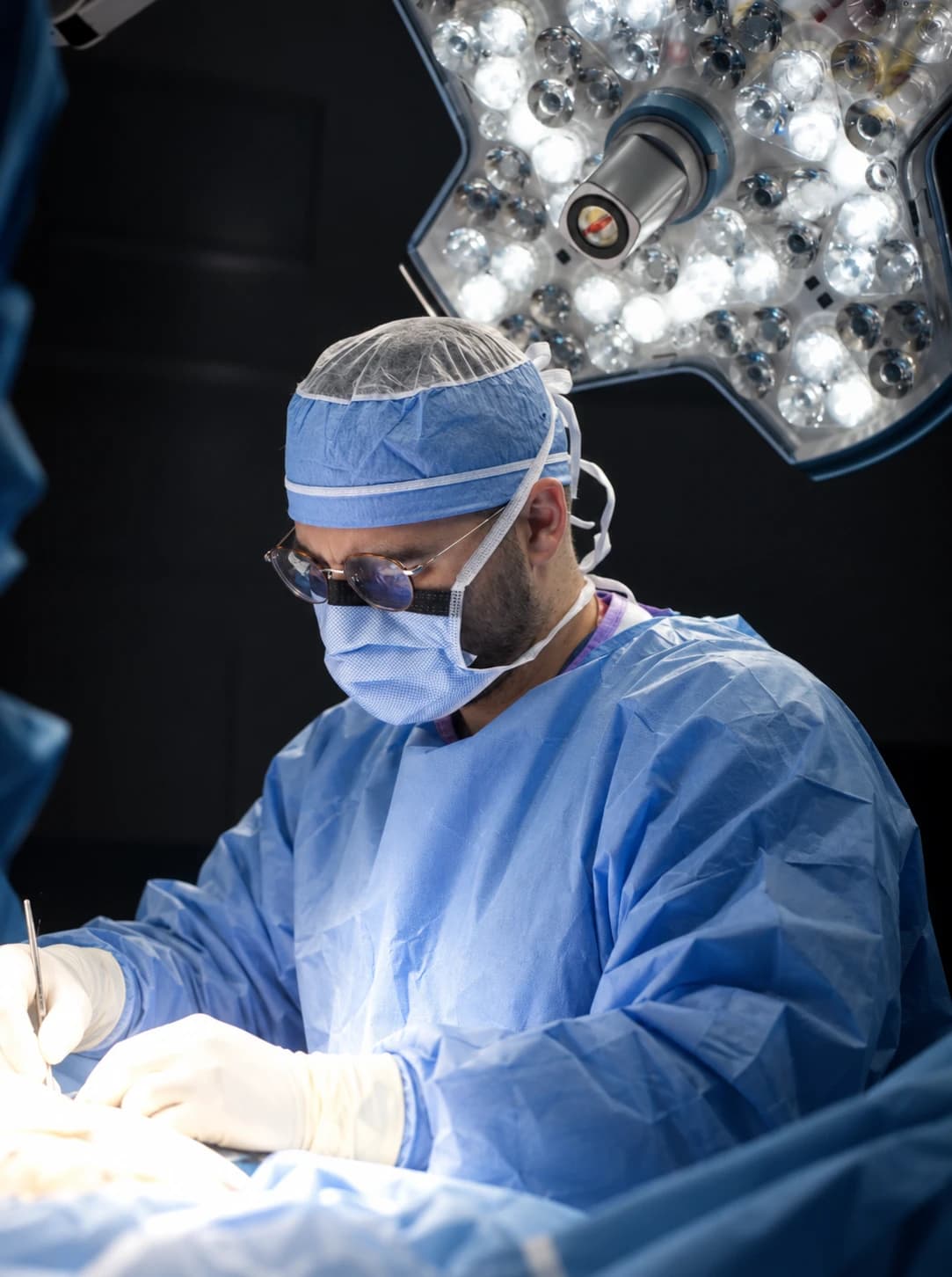
Reviewing surgeon
Foot and Ankle Surgeon at Center for Lower Extremity Surgery, a specialty practice of Ozturk Foot & Ankle. Dr. Ozturk is double board certified, as a Diplomate of the American Board of Podiatric Medicine (DABPM) and a Fellow of the Academy of Physicians in Wound Healing (FAPWH), and is a Fellow of the American Society of Podiatric Surgeons (FASPS) and the American Society of Podiatric Medicine (FASPM).
References
- 1.Pour Jafar S, Garibaldi R, Seidel A, Soares S. Smoking-related complications in foot and ankle surgery: a systematic review. Eur Rev Med Pharmacol Sci. 2024;28(24):4691-4700. PubMed 39749371 (external site)
- 2.Wukich DK, McMillen RL, Lowery NJ, Frykberg RG. Surgical site infections after foot and ankle surgery: a comparison of patients with and without diabetes. Diabetes Care. 2011;34(10):2211-3. PubMed 21816974 (external site)
- 3.Wukich DK, Crim BE, Frykberg RG, Rosario BL. Neuropathy and poorly controlled diabetes increase the rate of surgical site infection after foot and ankle surgery. J Bone Joint Surg Am. 2014;96(10):832-9. PubMed 24875024 (external site)
- 4.Domek N, Dux K, Pinzur M, Weaver F, Rogers T. Association Between Hemoglobin A1c and Surgical Morbidity in Elective Foot and Ankle Surgery. J Foot Ankle Surg. 2016;55(5):939-943. PubMed 27338653 (external site)
- 5.Pascarella G, De Quattro E, Strumia A, Del Buono R, Gargano F, Ruggiero A, et al. Perioperative Analgesia for Foot and Ankle Surgery: A Comprehensive Review. J Clin Med. 2025;14(17). PubMed 40944059 (external site)
- 6.Ma HH, Chou TA, Tsai SW, Chen CF, Wu PK, Chen WM. The efficacy and safety of continuous versus single-injection popliteal sciatic nerve block in outpatient foot and ankle surgery: a systematic review and meta-analysis. BMC Musculoskelet Disord. 2019;20(1):441. PubMed 31601208 (external site)
- 7.Mangwani J, Sheikh N, Cichero M, Williamson D. What is the evidence for chemical thromboprophylaxis in foot and ankle surgery? Systematic review of the English literature. Foot (Edinb). 2015;25(3):173-8. PubMed 26092561 (external site)
- 8.Heijboer RRO, Lubberts B, Guss D, Johnson AH, DiGiovanni CW. Incidence and Risk Factors Associated with Venous Thromboembolism After Orthopaedic Below-knee Surgery. J Am Acad Orthop Surg. 2019;27(10):e482-e490. PubMed 30289798 (external site)
- 9.Chien BY, Dixon T, Guss D, DiGiovanni C. Venous Thromboembolism Disease Prophylaxis in Foot and Ankle Surgery. Orthop Clin North Am. 2018;49(2):265-276. PubMed 29499827 (external site)
This article is general health information and isn’t a substitute for advice from a clinician who knows your history. Read our medical disclaimer and how we review content.
Learn more about this
Treatment
Preparing for surgery
Medical evaluation, smoking and diabetes, anesthesia, pain control, blood clots and getting your home ready.
Treatment
Recovery after surgery
Weight-bearing, swelling, timelines by operation, driving, work and the warning signs to watch for.
Diagnosis guide
Second opinions
When a second opinion is worth getting, when non-surgical care comes first, when surgery shouldn’t wait, and how to prepare.
Keep reading
Before and after surgery
Smoking, Diabetes and Foot Surgery Healing: What to Know
Two of the biggest risks for a healing problem are ones you can act on. What the research shows about smoking, blood sugar and nerve damage.
6 min read
Before and after surgery
When Can I Drive After Foot or Ankle Surgery?
The answer depends on which foot was operated on, what you are wearing and what you are taking. What research on braking shows, and how to decide.
6 min read
Toes and forefoot
Bunion Surgery Recovery: A Realistic Timeline
Recovery is measured in weeks to months, and it depends on the operation. A stage-by-stage look at what to expect and why plans differ.
6 min read