Smoking, Diabetes and Foot Surgery Healing: What to Know
Two of the biggest risks for a healing problem are ones you can act on. What the research shows about smoking, blood sugar and nerve damage.
Medically reviewed by Efe Ozturk, DPM · Last reviewed
Published 6 min read
Surgeons do not ask about smoking and blood sugar to judge you. They ask because these are two of the biggest risks for a wound that will not close or a bone that will not knit, and, unlike your age or the shape of your foot, they can sometimes be changed. This article explains what the research shows, what is and is not settled, and what you can do. It builds on our checklist for how to prepare for foot and ankle surgery.
Why the foot heals differently
Healing depends on a good supply of oxygen-rich blood, and both smoking and diabetes work against it. Nicotine and carbon monoxide constrict the small blood vessels and reduce oxygen delivery to tissue.[1] Diabetes can damage the nerves in the feet, so injuries and pressure go unnoticed, and it can narrow the arteries of the legs, so less blood reaches a wound to heal it.[3]
What the research shows about smoking
A systematic review of the effect of smoking on wound and bone healing in foot and ankle surgery found that smoking, including smokeless tobacco, significantly increases the risk of complications. Smokers showed markedly higher rates of nonunion, wound infection and delayed bone healing than non-smokers. In the studies reviewed, smokers had a 14.8% wound infection rate, and 14.5% of smokers had non-union or malunion, compared with 6.7% of non-smokers. Elective procedures such as total ankle replacement also did worse in smokers. The review reported that stopping smoking before surgery was linked to lower infection rates and better healing.[1]
One caution: the review was small, based on six articles selected from 28 screened, including retrospective studies. It shows a consistent direction of risk, but the exact percentages should be read loosely.[1]
What the research shows about diabetes
It is not simply “diabetes or no diabetes.” The studies point to nerve damage and other complications, and to blood sugar control, as the main drivers.
| Study | Who was studied | Main finding |
|---|---|---|
| Wukich et al. (2011) | 1,465 operations by one surgeon | Infection in 9.5% with diabetes and 2.4% without. Nerve damage, Charcot foot, smoking and longer operations were linked to infection. |
| Wukich et al. (2014) | 2,060 operations in four groups | Complicated diabetes: 7.25 times the risk of infection compared with people with neither diabetes nor neuropathy. Uncomplicated diabetes: no significant difference. |
| Domek et al. (2016) | 21,854 people with diabetes in a Veterans Affairs database | Each 1% rise in hemoglobin A1c raised the odds of a complication by 5%; neuropathy and other diabetes-related conditions mattered more. |
- Nerve damage matters more than the label. In the 1,465-operation study, peripheral neuropathy, Charcot neuroarthropathy, current or past smoking and longer operations were each associated with infection, and the authors concluded that it is neuropathy, not diabetes itself, that most strongly determines postoperative infection.[2]
- Complications of diabetes raise the risk. In the 2,060-operation study, people with complicated diabetes had a 7.25-fold higher risk than people without diabetes or neuropathy. People with uncomplicated diabetes did not differ significantly from those without diabetes. Nerve damage without diabetes raised the risk 4.72-fold, and both neuropathy and a hemoglobin A1c of 8% or more were independently associated with infection.[4]
- Blood sugar counts, but it is one factor among several. In the Veterans Affairs database, the overall 30-day complication rate was 3.2%. Each 1% rise in hemoglobin A1c raised the odds of a complication by 5%, having neuropathy raised the risk 1.78 times, and having two or three diabetes-related conditions raised it 3.08 times. The authors noted that complication rates are multifactorial.[5]
What you can do before an elective operation
If you smoke: ask us for help to stop. The review called preoperative counseling and smoking cessation programs crucial for optimizing outcomes.[1] This includes smokeless tobacco. The review called for more research on newer tobacco alternatives, so ask your team about them instead of assuming they are safe for healing.
If you have diabetes: know your recent hemoglobin A1c, and involve your diabetes doctor. Your surgical team may ask you to improve control before an elective operation, and it will look at nerve health and circulation too. There is no single cutoff that fits everyone: one study linked an A1c of 8% or more with infection,[4] and another found the risk rose steadily with each percentage point,[5] so your team weighs the number against the operation and everything else about you.
If you have numb feet: tell us. Reduced sensation means a problem on the foot can go unnoticed, and regular foot checks and proper footwear are part of preventing ulcers.[6] See diabetic foot ulcers and Charcot foot.
For everyone: good nutrition, controlled blood pressure and healthy skin all support healing. See preparing for foot and ankle surgery.
When surgery cannot wait
Not every operation is elective. Infections and abscesses in the diabetic foot need urgent surgical attention, and an urgent operation is planned around your condition.[7] Do not delay care for a foot problem while you try to improve your numbers.
After surgery
Healing continues to depend on the same things. Follow your weight-bearing plan, keep the foot elevated, and keep to your medicine schedule. If your feet are numb, look at them every day; a wound can appear without pain.[6] The signs of a problem are a sore or crack that is not healing, redness, warmth or swelling, drainage or a bad smell, skin that is pale, blue or cold, and fever.[3,7] The bunion surgery recovery timeline shows how recovery usually unfolds.
Questions to ask your surgeon
- How do my smoking and diabetes change the risks of this operation?
- Should anything be improved first, and by when?
- Do you want a recent hemoglobin A1c, and from whom?
- Is my nerve health or circulation a concern?
- Does this operation carry more risk for me than a different one?
Common questions
Can I have foot surgery if I have diabetes?
Yes. The studies above include many people with diabetes who had foot and ankle surgery, and the risk depended more on nerve damage, complications and control than on the diagnosis alone.[4,2]
How long before surgery should I stop smoking?
Sooner is better. The review linked stopping before surgery to fewer infections and better healing, but it does not settle a specific number of weeks, so your surgical team will advise you.[1]
What A1c do I need?
There is no single number for every person or operation. An A1c of 8% or more was associated with infection in one study, and each 1% rise raised the odds of a complication in another. Your team decides.[4,5]
I have neuropathy but not diabetes. Does it matter?
Yes. In one study, people with neuropathy but no diabetes had 4.72 times the risk of infection compared with people with neither.[4]
Do vaping and nicotine patches count?
The review looked at cigarettes and smokeless tobacco and called for more research on newer tobacco alternatives. Ask your surgical team.[1]
The bottom line
Smoking and diabetes complications, nerve damage above all, raise the risk of infection and slow healing. Neither rules out surgery, and both can often be improved beforehand. Tell your surgeon the whole picture, work on what you can change, and never delay care for an infected or badly wounded foot.
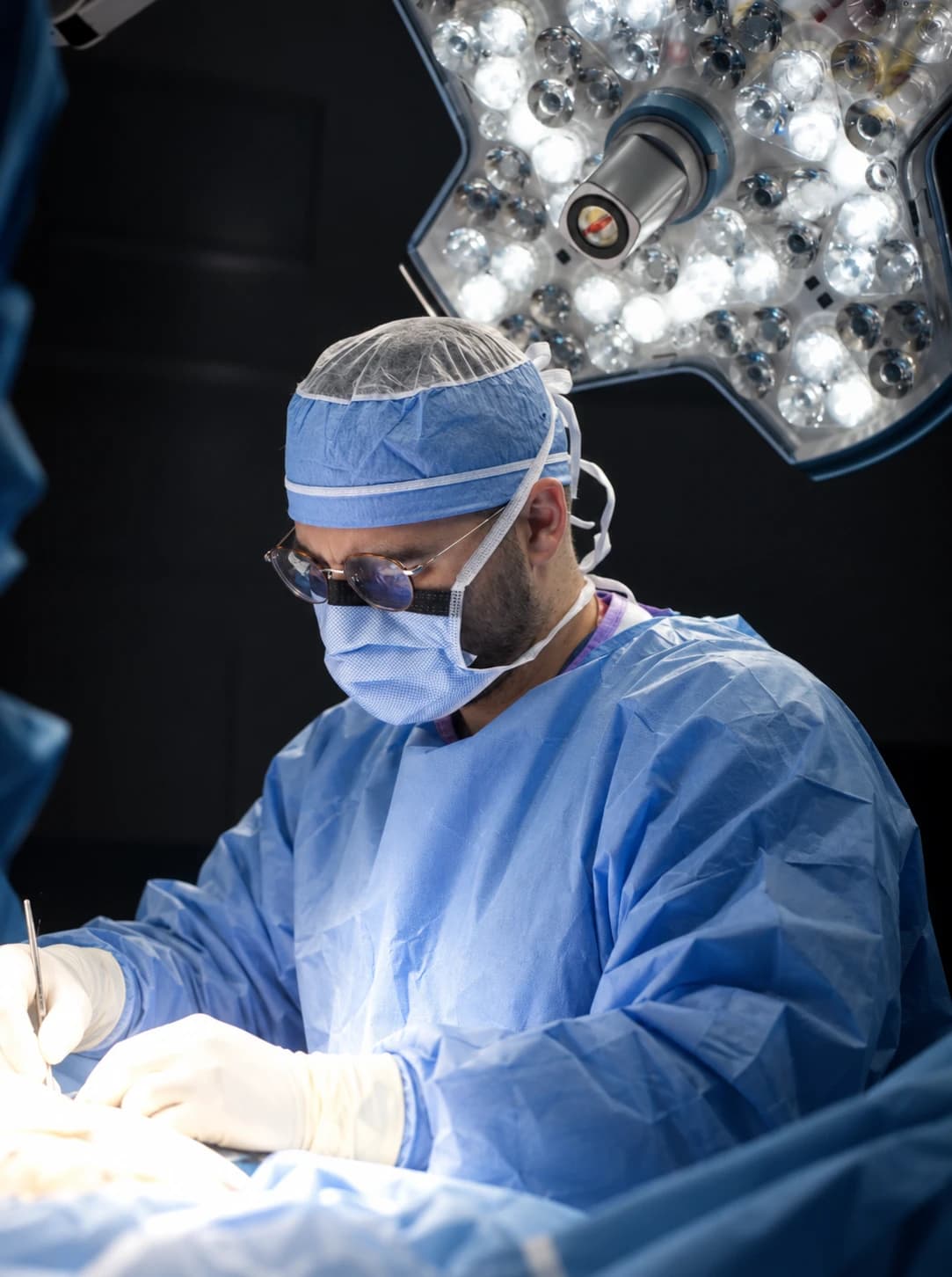
Reviewing surgeon
Foot and Ankle Surgeon at Center for Lower Extremity Surgery, a specialty practice of Ozturk Foot & Ankle. Dr. Ozturk is double board certified, as a Diplomate of the American Board of Podiatric Medicine (DABPM) and a Fellow of the Academy of Physicians in Wound Healing (FAPWH), and is a Fellow of the American Society of Podiatric Surgeons (FASPS) and the American Society of Podiatric Medicine (FASPM).
References
- 1.Pour Jafar S, Garibaldi R, Seidel A, Soares S. Smoking-related complications in foot and ankle surgery: a systematic review. Eur Rev Med Pharmacol Sci. 2024;28(24):4691-4700. PubMed 39749371 (external site)
- 2.Wukich DK, McMillen RL, Lowery NJ, Frykberg RG. Surgical site infections after foot and ankle surgery: a comparison of patients with and without diabetes. Diabetes Care. 2011;34(10):2211-3. PubMed 21816974 (external site)
- 3.National Institute of Diabetes and Digestive and Kidney Diseases. Diabetes and Foot Problems. niddk.nih.gov (external site)
- 4.Wukich DK, Crim BE, Frykberg RG, Rosario BL. Neuropathy and poorly controlled diabetes increase the rate of surgical site infection after foot and ankle surgery. J Bone Joint Surg Am. 2014;96(10):832-9. PubMed 24875024 (external site)
- 5.Domek N, Dux K, Pinzur M, Weaver F, Rogers T. Association Between Hemoglobin A1c and Surgical Morbidity in Elective Foot and Ankle Surgery. J Foot Ankle Surg. 2016;55(5):939-943. PubMed 27338653 (external site)
- 6.Bus SA, Sacco ICN, Monteiro-Soares M, Raspovic A, Paton J, Rasmussen A, et al. Guidelines on the prevention of foot ulcers in persons with diabetes (IWGDF 2023 update). Diabetes Metab Res Rev. 2024;40(3):e3651. PubMed 37302121 (external site)
- 7.Senneville É, Albalawi Z, van Asten SA, Abbas ZG, Allison G, Aragón-Sánchez J, et al. IWGDF/IDSA guidelines on the diagnosis and treatment of diabetes-related foot infections (IWGDF/IDSA 2023). Diabetes Metab Res Rev. 2024;40(3):e3687. PubMed 37779323 (external site)
This article is general health information and isn’t a substitute for advice from a clinician who knows your history. Read our medical disclaimer and how we review content.
Learn more about this
Treatment
Preparing for surgery
Medical evaluation, smoking and diabetes, anesthesia, pain control, blood clots and getting your home ready.
Condition
Diabetic foot ulcers
Open sores on the feet of people with diabetes, and the care that helps prevent and heal them.
Treatment
Fusion and joint replacement
How fusing or replacing a worn-out joint works, where each is used in the foot and ankle, and how they compare.
Condition
Charcot foot
Weakening and collapse of the bones of a numb foot, most often in people with diabetes.
Keep reading
Before and after surgery
How to Prepare for Foot and Ankle Surgery: A Checklist
A practical checklist for the weeks before surgery: your health review, the risks you can change, setting up your home, and what to bring.
7 min read
Ankle
Ankle Fusion vs. Ankle Replacement: How to Choose
Both operations relieve the pain of end-stage ankle arthritis. They differ in motion, complications and what happens later. How the choice is made.
6 min read
On the Ozturk Foot & Ankle blog
General foot care and non-surgical basics, from our parent practice.