Can Bunion Surgery Fail? Recurrence, Causes and Revision Surgery
Across 229 studies, bunions came back in 4.9% of feet. When one does, revision surgery improved the big toe angle by about 18 degrees and pain by about 41% across 20 studies.
Medically reviewed by Dr. Efe Ozturk · Last reviewed
Published 6 min read
“Can bunion surgery fail?” is a fair question, and a common one. People also search for why bunion surgery fails and why bunions come back after surgery. We perform bunion surgery, including bone-cutting operations (osteotomies), the Lapidus fusion and minimally invasive correction. This article covers how often bunions return, the reasons, how today’s techniques aim to prevent it, and what a second operation can achieve. If you are still deciding whether to have surgery at all, start with do I need bunion surgery?
How often does bunion surgery fail?
Most bunion operations hold. A review of 229 studies put the overall rate of a returning deformity at 4.9%. Only 1.5% had ongoing pain in the big toe joint.[1]
The number you read depends on how “recurrence” is measured. Studies use the big toe angle on an X-ray, and a stricter cutoff gives a higher number:
| Source | Follow-up | Recurrence |
|---|---|---|
| Review of 229 studies | Mostly short to mid term | 4.9% overall |
| Distal osteotomies, 17 studies | At least 5 years | 64% above 15°, 10% above 20°, 5% above 25° |
| Scarf osteotomies, 5 studies | 8 to 14 years | 40% above 15°, 2% above 25° |
| 23 studies, 2,914 patients | Various | About 25% pooled |
Sources: four systematic reviews.[1,5,6,3]
Why do bunions come back after surgery?
A review of 23 studies with 2,914 patients found these warning signs:[3]
- A larger bunion before surgery. A bigger big toe angle and a wider gap between the first two metatarsal bones both raised the risk.
- A correction left incomplete. A toe still leaning after surgery was strongly linked to recurrence.
- Sesamoids out of place. The sesamoids are two small bones under the big toe joint. When they were not brought back under the metatarsal head, recurrence was more likely.
- Age, which changed how strongly these factors mattered.
Rotation. In many bunions the first metatarsal is also twisted (pronated). In 39 patients after a Lapidus fusion, those whose twist was reduced on a standing CT scan had a quarter of the recurrence risk and better physical function at two years.[4]
Shaving the bump alone. If the bump is shaved off without realigning the bone, the bunion often returns.[7]
Early healing. The dressing holds the toe in its new position. Disturbing it before healing can let the bunion come back.[7]
How do modern techniques address recurrence?
Today’s operations aim at those causes, for example by correcting the bone in all three planes instead of two.[8]
- Lapidus fusion with 3D correction. The joint at the base of the first metatarsal (the first tarsometatarsal joint) is fused after the bone is straightened and untwisted. In a seven-center study of 173 patients (139 seen at four years), recurrence at four years was 8.4% with a 15-degree cutoff and 0.8% with a 20-degree cutoff. Patients put weight on the foot in a boot after about 8 days on average.[8]
- Minimally invasive correction. In 729 feet treated through small incisions and followed for about 2.6 years, the big toe angle fell from about 30 to 7 degrees, recurrence was 4.5% and complications were 6.1%.[9] See minimally invasive bunion surgery.
- Big toe joint fusion. For severe bunions, severe arthritis or an earlier unsuccessful bunion operation, fusing the big toe joint is commonly used.[7]
These results come from different study designs and definitions, so they cannot be ranked. Trials have not shown that one bunion operation beats the others. A Cochrane review of 25 randomized trials found most were at risk of bias, and simple and complex bone cuts gave similar pain relief.[10] The right choice depends on the size of your bunion, the stability of the base joint and the health of the big toe joint; see bunion surgery.
What does revision bunion surgery achieve?
Often a good result, when the cause of the failure is found and fixed. Across 20 studies and 586 revision operations:[2]
- the big toe angle improved by about 18 degrees
- foot scores rose by about 25% and pain scores improved by about 41%
- big toe motion stayed about the same as before the revision
- the bunion came back again in 5.1%
The authors stressed careful planning to identify why the first operation failed.[2] A second review of 10 studies (301 feet) found that both open and minimally invasive revisions improved scores, and the minimally invasive revisions did not show worse results or safety concerns.[11] If your bunion has come back, a fresh opinion from a Foot and Ankle Surgeon is a reasonable step; see second opinions before foot or ankle surgery.
Why is bunion surgery so painful?
Because the surgeon cuts and moves bone, bunion surgery is associated with moderate to severe pain afterward.[12] Planned pain control makes a real difference. A 2026 expert review recommends acetaminophen with an anti-inflammatory medicine, a dose of dexamethasone, and an ankle block or numbing medicine in the wound, with opioids kept as a backup. For pain control, it also favors minimally invasive or percutaneous bone cuts over open ones.[12] In a randomized trial, the minimally invasive version of one operation meant less pain right after surgery, with about 14 times more X-ray exposure.[13] For what each week feels like, see the bunion surgery recovery timeline.
What are the limits?
Possible complications of any bunion operation include infection, nerve injury, pain that is not relieved, bone that does not fully heal, a stiff big toe joint and recurrence.[7] Recurrence on X-ray climbs with longer follow-up, especially with lower angle cutoffs.[5] Revision is a bigger undertaking than a first operation: 4.1% of revisions did not heal and 8.7% needed yet another procedure.[2] Most of this evidence comes from case series rather than randomized trials.[1,10]
Common questions
Can bunion surgery fail?
It can, but the overall recurrence rate in a review of 229 studies was 4.9%.[1]
Why do bunions come back after surgery?
The strongest risk factors are a correction left incomplete and sesamoids left out of place. A large bunion before surgery and a twisted first metatarsal also matter.[3,4]
Is there one right bunion surgery procedure?
No single procedure has been shown to beat the others in trials. The choice is matched to your foot.[10]
Can a failed bunion surgery be fixed?
Yes. Revision surgery improved the toe angle by about 18 degrees and pain by about 41% across 20 studies.[2]
The bottom line
Bunion surgery works for most people, and when a bunion does come back, a well-planned revision can correct it. The key is finding out why it failed, whether that is an unstable base joint, a twisted bone or a correction left incomplete, and fixing that cause. Dr. Ozturk is a double board certified Foot and Ankle Surgeon and podiatrist who sees patients in Lyndhurst, Paramus and Millburn. Read about bunions, see our parent practice’s page on bunion treatment and surgery (external site), or request an appointment. Please call our office at 908-215-5953 to inquire about your insurance.
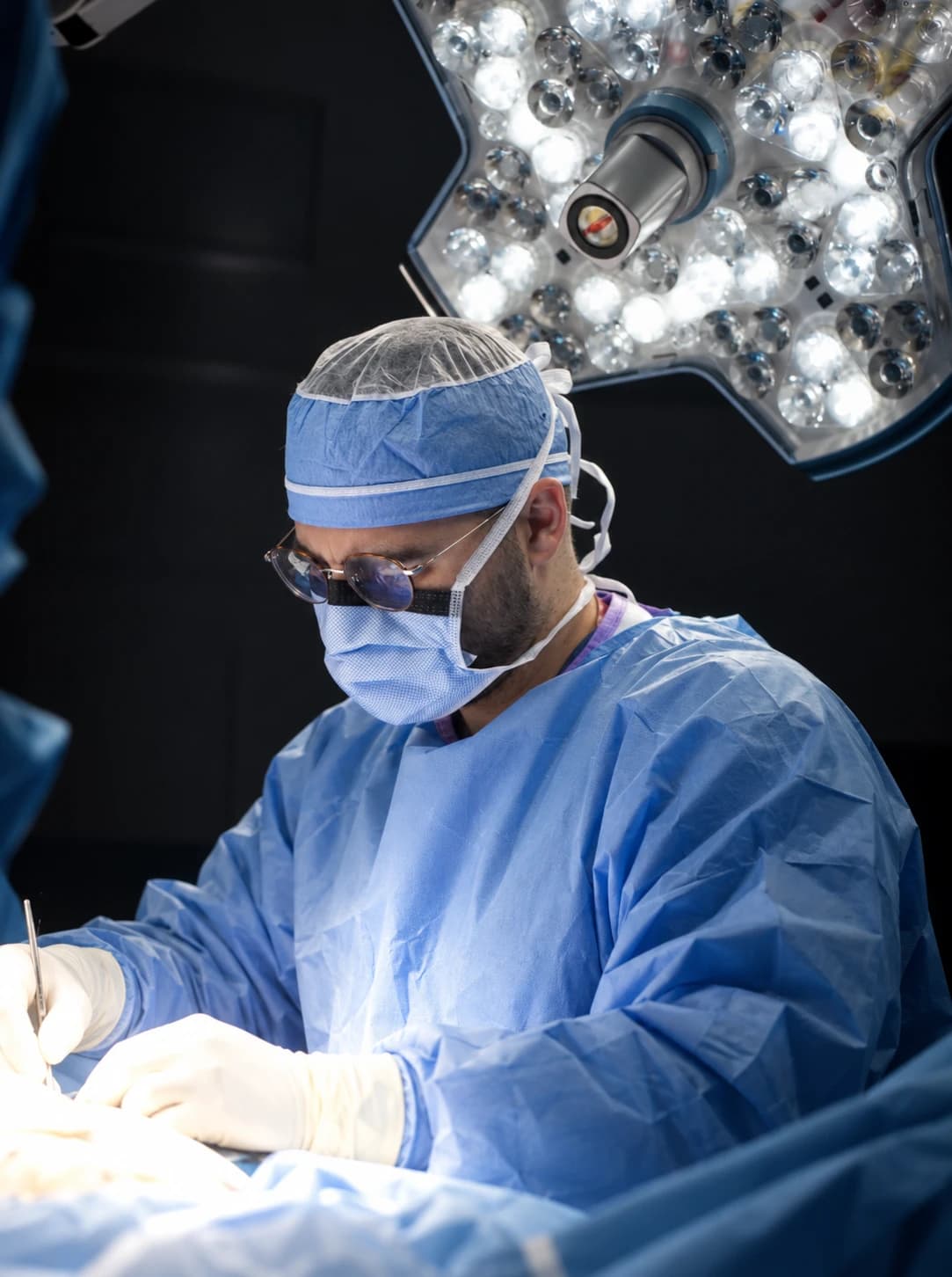
Reviewing surgeon
Foot and Ankle Surgeon at Center for Lower Extremity Surgery, a specialty practice of Ozturk Foot & Ankle. Dr. Ozturk is double board certified, as a Diplomate of the American Board of Podiatric Medicine (DABPM) and a Fellow of the Academy of Physicians in Wound Healing (FAPWH), and is a Fellow of the American Society of Podiatric Surgeons (FASPS) and the American Society of Podiatric Medicine (FASPM).
References
- 1.Barg A, Harmer JR, Presson AP, Zhang C, Lackey M, Saltzman CL. Unfavorable Outcomes Following Surgical Treatment of Hallux Valgus Deformity: A Systematic Literature Review. J Bone Joint Surg Am. 2018;100(18):1563-1573. PubMed 30234626 (external site)
- 2.Migliorini F, Eschweiler J, Tingart M, Maffulli N. Revision surgeries for failed hallux valgus correction: a systematic review. Surgeon. 2021;19(6):e497-e506. PubMed 33423923 (external site)
- 3.Ezzatvar Y, López-Bueno L, Fuentes-Aparicio L, Dueñas L. Prevalence and Predisposing Factors for Recurrence after Hallux Valgus Surgery: A Systematic Review and Meta-Analysis. J Clin Med. 2021;10(24):5753. PubMed 34945049 (external site)
- 4.Conti MS, Patel TJ, Zhu J, Elliott AJ, Conti SF, Ellis SJ. Association of first metatarsal pronation correction with patient-reported outcomes and recurrence rates in hallux valgus. Foot Ankle Int. 2022;43(3):309-320. PubMed 34612760 (external site)
- 5.Lalevee M, de Cesar Netto C, ReSurg, Boublil D, Coillard JY. Recurrence Rates With Longer-Term Follow-up After Hallux Valgus Surgical Treatment With Distal Metatarsal Osteotomies: A Systematic Review and Meta-analysis. Foot Ankle Int. 2023;44(3):210-222. PubMed 36859795 (external site)
- 6.Lalevee M, Saffarini M, van Rooij F, Nover L, Nogier A, Beaudet P. Recurrence rates with long-term follow-up after hallux valgus surgical treatment using shaft metatarsal osteotomies: a systematic review and meta-analysis. EFORT Open Rev. 2024;9(10):933-940. PubMed 39360793 (external site)
- 7.American Academy of Orthopaedic Surgeons. Bunion Surgery. OrthoInfo. orthoinfo.org (external site)
- 8.Hatch DJ, Chhabra A, Dayton M, et al. Four-year outcomes following triplanar tarsometatarsal arthrodesis with early weightbearing for Hallux Valgus: A multicenter prospective study. J Foot Ankle Surg. 2026;65(1):10.e1-10.e7. PubMed 40714338 (external site)
- 9.Lam P, Murphy EP, Chua MJ, et al. Fourth-Generation Percutaneous Transverse Osteotomies for Hallux Valgus. J Bone Joint Surg Am. 2025;107(19):2185-2196. PubMed 40854004 (external site)
- 10.Dias CG, Godoy-Santos AL, Ferrari J, Ferretti M, Lenza M. Surgical interventions for treating hallux valgus and bunions. Cochrane Database Syst Rev. 2024;7(7):CD013726. PubMed 39051477 (external site)
- 11.Nair A, Bence M, Saleem J, Yousaf A, Al-Hilfi L, Kunasingam K. A systematic review of open and minimally invasive surgery for treating recurrent hallux valgus. Surg J (N Y). 2022;8(4):e350-e356. PubMed 36568477 (external site)
- 12.Wust M, Desai N, Joshi GP, et al. Pain management after hallux valgus repair surgery: an updated systematic review and procedure-specific postoperative pain management (PROSPECT) recommendations. Eur J Anaesthesiol. 2026;43(1):11-18. PubMed 41122054 (external site)
- 13.Torrent J, Baduell A, Vega J, Malagelada F, Luna R, Rabat E. Open vs minimally invasive scarf osteotomy for hallux valgus correction: a randomized controlled trial. Foot Ankle Int. 2021;42(8):982-993. PubMed 34024185 (external site)
This article is general health information and isn’t a substitute for advice from a clinician who knows your history. Read our medical disclaimer and how we review content.
Learn more about this
Treatment
Bunion surgery
Osteotomy, Lapidus fusion and minimally invasive options: how bunion operations are chosen, what recovery involves and what studies show.
Treatment
Minimally invasive bunion surgery
Bunion correction through a few small incisions: who it suits, how it compares with open surgery, what recovery involves and the risks.
Diagnosis guide
Second opinions
When a second opinion is worth getting, when non-surgical care comes first, when surgery shouldn’t wait, and how to prepare.
Keep reading
Toes and forefoot
Do I Need Bunion Surgery? How to Decide
A bunion is not an emergency. Here is how to tell whether pain, shoes and daily life have reached the point where surgery is worth discussing.
7 min read
Toes and forefoot
Bunion Surgery Recovery: A Realistic Timeline
Recovery is measured in weeks to months, and it depends on the operation. A stage-by-stage look at what to expect and why plans differ.
6 min read
Toes and forefoot
Why Is Bunion Surgery Not Recommended? What Has Changed
For a bunion that hurts and limits you, surgery is recommended. The results, what has changed, why waiting has a cost, and who is and isn’t a good candidate.
7 min read
On the Ozturk Foot & Ankle blog
General foot care and non-surgical basics, from our parent practice.