Achilles Tendon Surgery Recovery: A Stage-by-Stage Timeline
Repair lowers the chance of a second tear, and 77% returned to sport in one review. Why it is worth a year of recovery, and the road back stage by stage.
Medically reviewed by Dr. Efe Ozturk · Last reviewed
Published 7 min read
This article starts where Achilles rupture: surgery or no surgery? stops. You have decided on a repair, or just had one. The timings below come from published studies. There is still no single agreed plan, so your surgeon’s instructions come first.[6] For the operation itself, see Achilles tendon surgery.
Why is Achilles tendon repair worth the recovery?
- Fewer repeat tears. In the trial above, 554 people were assigned to open repair, minimally invasive repair or no surgery. Re-tears occurred in 0.6% after either kind of repair and in 6.2% without surgery.[1] A review of 29 studies also found fewer re-tears after surgery, 2.3% against 3.9%.[7]
- More push-off. The American College of Foot and Ankle Surgeons notes that surgery often increases push-off strength.[8] In a trial of 60 people on the same rehabilitation plan, surgery brought calf strength back sooner, and it was 10% to 18% greater at 18 months, although an Achilles performance score was similar.[9]
- A real return to activity. Across nine studies, people who had surgery reported good function and low pain about three and a half years later.[2] A 2026 surgical guideline calls repair a reliable option and a cornerstone of restoring function, while noting that who needs it is still debated.[6]
- Early repair pays off. Outcomes are better when the repair is done soon after the injury.[3]
What does Achilles tendon surgery recovery look like, stage by stage?
Think of it as a road back, with a clear job at each stage.
| Stage | Where you are | What matters most |
|---|---|---|
| First 2 weeks | Cast, splint or boot with the toes pointed down. Weight depends on your plan. | Protect the repair and the incision. |
| Weeks 2 to 6 | Boot. Stitches come out. Many plans add weight and controlled ankle motion. | Move only as your plan allows. |
| Weeks 6 to 12 | Boot use is reduced. Motion work, then strength work. | Steady therapy, without rushing. |
| Months 3 to 6 | Strength builds. The tendon may still be lengthening. | Heel raises, balance, walking without a limp. |
| Months 6 to 12 | Many active people return to sport. | Clearance based on testing. |
| Past 12 months | Some keep improving for up to two years. | Keep up the strength work. |
The first two weeks
You will likely go home the same day in a cast, splint or boot.[3] The foot is usually held with the toes pointed down, which keeps the tendon stable while it heals.[10,3]
Plans differ most here. In a review of trials, full weight right away brought higher satisfaction and earlier walking.[10] In another trial, usual care was two weeks in a cast with no weight, then four weeks of weight in a brace.[11] Ask which plan is yours.
Weeks two to six
Stitches come out several weeks after surgery.[3] A review of 43 trials suggested starting ankle motion after one to two weeks of protection, because motion right after surgery may raise the risk of a new tear.[12]
If your right leg was repaired, driving is a question at this stage. In one study of open repair, 54 of 59 people passed a braking test at six weeks.[13] See when can I drive after foot or ankle surgery?
Weeks six to twelve
Your boot use is reduced over time, you work on range of motion, and strengthening is gradually added.[3] Don’t panic if your calf still feels weak. In one study of people treated with and without surgery, 49% could not do a single-leg heel raise at 12 weeks.[14]
Months three to six
The repaired tendon can keep lengthening for up to six months after surgery, and weight-bearing plans in the first eight weeks did not change that in one trial.[15]
Running comes back when you are ready. A 2026 expert consensus looks for no pain, no limp, walking on tiptoes, ten single-leg heel raises, good balance on one leg and feeling mentally ready. These signs still need testing in studies, so they guide the decision rather than make it.[16]
What does early movement really change?
Early movement means bearing weight and moving the ankle sooner, in a boot or brace, instead of weeks in a rigid cast. The evidence favors it for the short term:
- Safety. A review of 10 trials found early rehabilitation as safe as a cast, with higher satisfaction.[5] A later review of 20 trials reached a similar conclusion.[17]
- Speed. Open repair with earlier rehabilitation brought people back to play about four weeks sooner.[18] In one trial after minimally invasive repair, people returned to work at about 4.5 weeks compared with 7.5.[19]
- Long-term results. Here the gap closes. Strength differences were negligible by six months, and one trial found no measurable difference at 12 months.[5,15]
When can I return to sport after Achilles surgery?
Most active people get back. Beyond the 77% above, a review of 108 studies, including people treated without surgery, found that 80% of patients returned to play, with lower rates in studies that measured the return more carefully.[20]
In a review of pro athletes with Achilles ruptures, 76% returned, at an average of 11 months, and performance often dropped afterward.[21] Returning to your previous level can take up to 18 to 24 months after the injury.[3]
What are the limits of Achilles repair?
Repair has limits, and the same large trial shows them. At 12 months, its main symptom and activity score and its physical performance tests did not differ between repair and non-surgical care, and its authors concluded that surgery was not linked to better outcomes at that point. Nerve injuries occurred in 2.8% after open repair and 5.2% after minimally invasive repair, against 0.6% without surgery.[1] In the review of 29 studies, complications ran 4.9% against 1.6%, mainly infection, and the re-tear gap was not statistically significant in studies using early-motion rehabilitation.[7] A 2024 review found no significant difference in return-to-play rates between surgery and non-surgical care.[18] Across 20 trials of repair, new tears occurred in 2.7% of people, major complications in 2.6% and minor ones in 11.8%.[17] Some loss of strength is common whatever the treatment.[3] Symptomatic clots are uncommon after foot and ankle surgery overall, but the highest rates have been reported with Achilles surgery.[22] In a trial that screened everyone with ultrasound, about a third had a clot by six weeks, early movement did not prevent them, and putting less weight on the leg was linked to more clots.[11] Smoking, poorly controlled diabetes and nerve damage raise the risk of infection.[23,24] Ask your surgeon about your risk. If burning or electric pain lingers, our sister practice evaluates nerve pain after surgery (external site). See recovery after foot and ankle surgery.
Common questions
How long after Achilles surgery can I walk?
On an early plan, you may walk in a boot within days. On a slower plan, it may be two to eight weeks.[10,11,15] Expect roughly six weeks of protection before boot use starts to come down.[3]
How long is Achilles surgery recovery time?
Complete recovery can take about 12 months, and some people need closer to two years.[3]
When can I go back to work?
It depends on your job and your plan. Most people get back to their job.[3] Physical work usually takes longer than desk work, so tell us about your job before surgery.
Is Achilles surgery worth the recovery?
Its clearest advantage is a lower chance of a second tear. In a large randomized trial, 0.6% of people who had surgery tore the tendon again, against 6.2% of those treated without surgery, though the trial’s main 12-month score was similar.[1] Among 748 people who had surgery, 77% returned to sport.[2]
The bottom line
Achilles repair is a long road with a clear destination: a tendon less likely to tear again and a real shot at getting back to what you love. Expect about a year to feel complete. Dr. Ozturk is a double board certified Foot and Ankle Surgeon and podiatrist who sees patients in Lyndhurst, Paramus and Millburn. You can learn more about Achilles care (external site) at our parent practice or request an appointment.
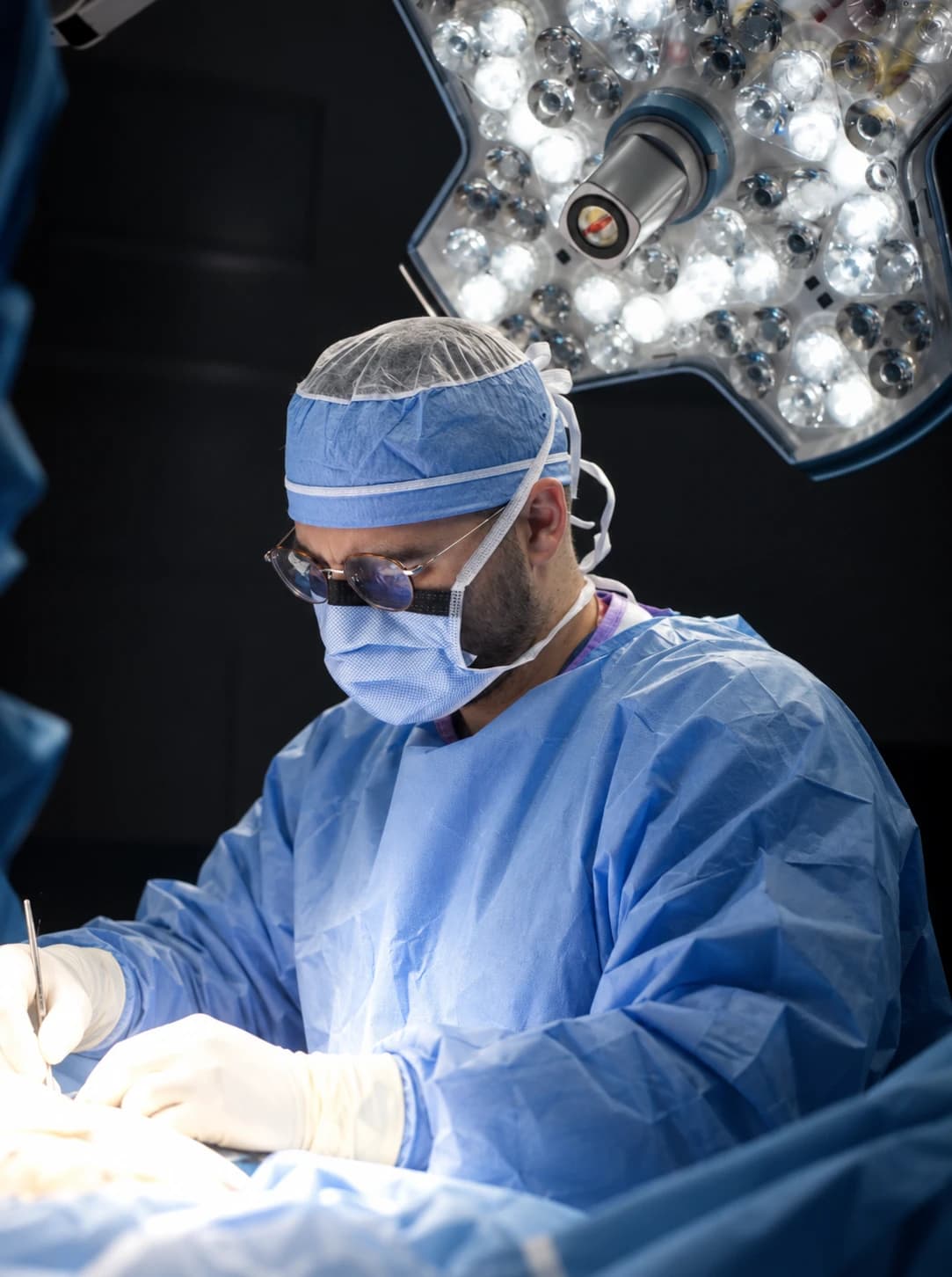
Reviewing surgeon
Foot and Ankle Surgeon at Center for Lower Extremity Surgery, a specialty practice of Ozturk Foot & Ankle. Dr. Ozturk is double board certified, as a Diplomate of the American Board of Podiatric Medicine (DABPM) and a Fellow of the Academy of Physicians in Wound Healing (FAPWH), and is a Fellow of the American Society of Podiatric Surgeons (FASPS) and the American Society of Podiatric Medicine (FASPM).
References
- 1.Myhrvold SB, Brouwer EF, Andresen TKM, et al. Nonoperative or Surgical Treatment of Acute Achilles’ Tendon Rupture. N Engl J Med. 2022;386(15):1409-1420. PubMed 35417636 (external site)
- 2.Cofano E, Colace S, Piro F, et al. Successful functional outcomes and return to sport rate can be achieved after surgery for acute Achilles tendon rupture: A systematic review. J Exp Orthop. 2025;12(4):e70469. PubMed 41164319 (external site)
- 3.American Academy of Orthopaedic Surgeons. Achilles Tendon Rupture (Tear). OrthoInfo. orthoinfo.org (external site)
- 4.Gould HP, Bano JM, Akman JL, Fillar AL. Postoperative Rehabilitation Following Achilles Tendon Repair: A Systematic Review. Sports Med Arthrosc Rev. 2021;29(2):130-145. PubMed 33972490 (external site)
- 5.McCormack R, Bovard J. Early functional rehabilitation or cast immobilisation for the postoperative management of acute Achilles tendon rupture? A systematic review and meta-analysis of randomised controlled trials. Br J Sports Med. 2015;49(20):1329-35. PubMed 26281836 (external site)
- 6.Feng SM, Maffulli N, Oliva F, et al. Evidence-based clinical practice guidelines on the surgical management of acute Achilles tendon rupture. Br Med Bull. 2026;157(1):ldaf026. PubMed 41528729 (external site)
- 7.Ochen Y, Beks RB, van Heijl M, et al. Operative treatment versus nonoperative treatment of Achilles tendon ruptures: systematic review and meta-analysis. BMJ. 2019;364:k5120. PubMed 30617123 (external site)
- 8.American College of Foot and Ankle Surgeons. Achilles Tendon Rupture. FootHealthFacts. foothealthfacts.org (external site)
- 9.Lantto I, Heikkinen J, Flinkkila T, et al. A Prospective Randomized Trial Comparing Surgical and Nonsurgical Treatments of Acute Achilles Tendon Ruptures. Am J Sports Med. 2016;44(9):2406-14. PubMed 27307495 (external site)
- 10.Brumann M, Baumbach SF, Mutschler W, Polzer H. Accelerated rehabilitation following Achilles tendon repair after acute rupture - Development of an evidence-based treatment protocol. Injury. 2014;45(11):1782-90. PubMed 25059505 (external site)
- 11.Aufwerber S, Heijne A, Edman G, Grävare Silbernagel K, Ackermann PW. Early mobilization does not reduce the risk of deep venous thrombosis after Achilles tendon rupture: a randomized controlled trial. Knee Surg Sports Traumatol Arthrosc. 2020;28(1):312-319. PubMed 31679069 (external site)
- 12.Wang R, Huang L, Jiang S, et al. Immediate mobilization after repair of Achilles tendon rupture may increase the incidence of re-rupture: a systematic review and meta-analysis of randomized controlled trials. Int J Surg. 2024;110(6):3888-3899. PubMed 38477123 (external site)
- 13.Reb CW, McDonald E, Shakked RJ, et al. Brake Response Time Recovery After Achilles Tendon Repair. Foot Ankle Spec. 2020;13(3):188-192. PubMed 31014108 (external site)
- 14.Olsson N, Karlsson J, Eriksson BI, Brorsson A, Lundberg M, Silbernagel KG. Ability to perform a single heel-rise is significantly related to patient-reported outcome after Achilles tendon rupture. Scand J Med Sci Sports. 2014;24(1):152-8. PubMed 22716232 (external site)
- 15.Eliasson P, Agergaard AS, Couppé C, et al. The Ruptured Achilles Tendon Elongates for 6 Months After Surgical Repair Regardless of Early or Late Weightbearing in Combination With Ankle Mobilization: A Randomized Clinical Trial. Am J Sports Med. 2018;46(10):2492-2502. PubMed 29965789 (external site)
- 16.Gaspar M, Maffulli N, Memain G, Carmont MR, Hardy A, Arnaud C. Criteria for Return to Running After Surgical Repair of Acute Achilles Tendon Rupture: A Modified Delphi Consensus Study. Sports Med. 2026. PubMed 42503592 (external site)
- 17.Massen FK, Shoap S, Vosseller JT, et al. Rehabilitation following operative treatment of acute Achilles tendon ruptures: a systematic review and meta-analysis. EFORT Open Rev. 2022;7(10):680-691. PubMed 36287109 (external site)
- 18.Bak BM, Seow D, Teo YZE, Hasan MY, Pearce CJ. Return to Play and Functional Outcomes Following Treatment of Acute Achilles Tendon Ruptures: A Systematic Review and Meta-Analysis. J Foot Ankle Surg. 2024;63(3):420-429. PubMed 38296023 (external site)
- 19.Deng Z, Li Z, Shen C, et al. Outcomes of early versus late functional weight-bearing after the acute Achilles tendon rupture repair with minimally invasive surgery: a randomized controlled trial. Arch Orthop Trauma Surg. 2023;143(4):2047-2053. PubMed 35767039 (external site)
- 20.Zellers JA, Carmont MR, Grävare Silbernagel K. Return to play post-Achilles tendon rupture: a systematic review and meta-analysis of rate and measures of return to play. Br J Sports Med. 2016;50(21):1325-1332. PubMed 27259751 (external site)
- 21.Johns W, Walley KC, Seedat R, Thordarson DB, Jackson B, Gonzalez T. Career Outlook and Performance of Professional Athletes After Achilles Tendon Rupture: A Systematic Review. Foot Ankle Int. 2021;42(4):495-509. PubMed 33218267 (external site)
- 22.Mangwani J, Sheikh N, Cichero M, Williamson D. What is the evidence for chemical thromboprophylaxis in foot and ankle surgery? Systematic review of the English literature. Foot (Edinb). 2015;25(3):173-8. PubMed 26092561 (external site)
- 23.Pour Jafar S, Garibaldi R, Seidel A, Soares S. Smoking-related complications in foot and ankle surgery: a systematic review. Eur Rev Med Pharmacol Sci. 2024;28(24):4691-4700. PubMed 39749371 (external site)
- 24.Wukich DK, Crim BE, Frykberg RG, Rosario BL. Neuropathy and poorly controlled diabetes increase the rate of surgical site infection after foot and ankle surgery. J Bone Joint Surg Am. 2014;96(10):832-9. PubMed 24875024 (external site)
This article is general health information and isn’t a substitute for advice from a clinician who knows your history. Read our medical disclaimer and how we review content.
Learn more about this
Treatment
Achilles tendon repair
Sewing a ruptured Achilles tendon back together, or treating a long-standing tendon problem, and what recovery involves.
Condition
Achilles tendon injuries
Pain or thickening of the tendon behind the heel, or a partial or complete tear.
Treatment
Recovery after surgery
Weight-bearing, swelling, timelines by operation, driving, work and the warning signs to watch for.
Keep reading
Heel, arch and tendons
Achilles Tendon Rupture: Surgery or No Surgery?
Both paths can work. What the trials say about re-rupture, complications and rehabilitation, and how the choice is made for an individual person.
6 min read
Before and after surgery
When Can I Drive After Foot or Ankle Surgery?
The answer depends on which foot was operated on, what you are wearing and what you are taking. What research on braking shows, and how to decide.
6 min read
Before and after surgery
How to Prepare for Foot and Ankle Surgery: A Checklist
A practical checklist for the weeks before surgery: your health review, the risks you can change, setting up your home, and what to bring.
7 min read
Ankle
Ankle Replacement Recovery: Timeline and How Long It Lasts
Ankle replacement offers pain relief and an ankle that still moves. What the surgery gives, the recovery timeline, and how long implants last in national data.
6 min read
Toes and forefoot
Why Is Bunion Surgery Not Recommended? What Has Changed
For a bunion that hurts and limits you, surgery is recommended. The results, what has changed, why waiting has a cost, and who is and isn’t a good candidate.
7 min read