Ankle Arthroscopy Recovery: Timeline, Walking and Return to Sport
Recovery after an ankle scope depends on what was done. Debridement gets many people back to work in days and athletes back in about 2 months; cartilage repair takes longer.
Medically reviewed by Dr. Efe Ozturk · Last reviewed
Published 5 min read
If you have ankle pain, catching or swelling that hasn’t settled, ankle arthroscopy lets a Foot and Ankle Surgeon see and treat the problem through a few small incisions. This article covers what happens after it. For the operation itself, see ankle arthroscopy.
Why is recovery faster after arthroscopy?
For arthroscopy of any joint, the American Academy of Orthopaedic Surgeons says recovery is much faster than from open surgery, most patients go home within an hour or two, and joint pain afterward is usually minor.[4] The results are strong. Across 20 studies of arthroscopy for impingement (tissue or bone spurs pinching the front of the ankle), those that reported satisfaction found that 74% or more of patients rated it good to excellent, and 94.3% to 97.5% would have the same operation again.[5] In pooled studies, arthroscopic debridement (used for more severe impingement) improved a 100-point ankle score by 30.5 points, against 12.5 for nonsurgical care (used for milder cases), and symptoms came back less often (10% against 25%).[6]
How does ankle arthroscopy recovery time change with the procedure?
| What was done | What studies found |
|---|---|
| Debridement of front-of-ankle spurs, 29 NFL players | All back at the same level, at about 8.4 weeks |
| Small-incision removal of an os trigonum (an extra bone at the back of the ankle), 435 patients | Back to sport at about 7.8 weeks |
| Microfracture for a cartilage lesion, 81 ankles | Weight at 2 weeks or at 6 weeks gave the same results |
| Bone marrow stimulation, review of studies | 83.3% returned to sport |
Sources: two studies and two reviews.[1,7,2,8]
Ankle arthroscopy debridement recovery time, week by week
The first three steps come from general guidance on arthroscopy of any joint; the last comes from ankle studies.
- Day of surgery. You go home within an hour or two. Someone needs to drive you.[4]
- The first days. The incisions are small. Many people get back to daily activities, desk work or school within a few days. A job that involves heavy work may take longer.[4]
- The next several weeks. Regular exercise restores strength and motion, and the joint still takes several weeks to recover completely.[4]
- About 2 months. In NFL players treated for front-of-ankle spurs, return to play came at about 8.4 weeks, with pain falling from 4.2 to 0.4 out of 10 and upward ankle bend more than doubling.[1]
How long am I non-weight-bearing after microfracture?
Microfracture, a type of bone marrow stimulation, makes tiny holes in the bone under damaged cartilage so that a repair tissue can form. It is used for smaller cartilage lesions on the top of the talus, the ankle bone; see osteochondral lesions of the talus.
Some plans keep weight off the foot for 6 weeks. In a randomized trial of 81 ankles, people allowed to put weight on the foot at 2 weeks did as well, about three years later, as those kept off it for 6 weeks.[2] A review of five trials with 283 patients found the same and favored early weight to speed the return to work and sport.[9] Plans still vary widely. A review of more than 200 studies found 255 different rehab plans, and most went by the calendar rather than by tests.[10] Your plan depends on the size of the lesion and what was done. Larger lesions may need a graft; see ankle cartilage repair.
What if ligament work was done too?
Arthroscopy is sometimes done along with a ligament repair for an ankle that keeps rolling. In that case, the ligament sets the pace of your recovery. See our ankle ligament reconstruction recovery guide.
What exercises help after ankle arthroscopy?
Your surgeon will recommend specific exercises.[4] Expect to work on gentle motion first, then strength, then balance. Balance training may help keep impingement from coming back.[6] Keep the foot raised when you rest, and don’t push through sharp pain.
What are the limits?
Ankle arthroscopy has a low risk, but not zero. In the review of 7,942 cases, 55.4% of complications were nerve injuries, and about a third of those affected the superficial peroneal nerve, which gives feeling to the top of the foot. One in five nerve injuries was permanent. Complications were more frequent after arthroscopy from the back of the ankle (6.6%) than from the front (4.35%), and major complications occurred in 0.2%.[3] After impingement surgery, symptoms returned in about 10%, and smoking, existing arthritis and advanced cartilage damage predicted poorer results.[6] The impingement studies were too varied to compare types of impingement.[5] After marrow stimulation, 52.7% returned to their pre-injury level of sport.[8] If numbness or burning on the top of the foot lingers, our sister practice evaluates superficial peroneal nerve problems (external site).
Common questions
What is the ankle scope recovery time?
After arthroscopy of any joint, many people resume daily activities and desk work within a few days, and the joint takes several weeks to recover fully.[4] Athletes treated for front-of-ankle spurs returned at about 8 weeks.[1]
What is the ankle arthroscopy debridement recovery time?
In professional football players, return to the same level of play came at an average of 8.4 weeks.[1]
How long will I be on crutches after ankle arthroscopy with microfracture?
In one trial, people started putting weight on the foot at either 2 or 6 weeks, with similar results, and a review of five trials agreed.[2,9]
Which ankle arthroscopy recovery exercises help?
Motion first, then strength, then balance, following your surgeon’s plan.[4,6]
The bottom line
Ankle arthroscopy gets many people back to work within days and athletes back to sport within a couple of months, with a low complication rate. Cartilage repair takes longer, and your plan should match what was done. Dr. Ozturk is a double board certified Foot and Ankle Surgeon and podiatrist who sees patients in Lyndhurst, Paramus and Millburn. Read our parent practice’s guide to ankle arthroscopy as keyhole surgery (external site), or request an appointment.
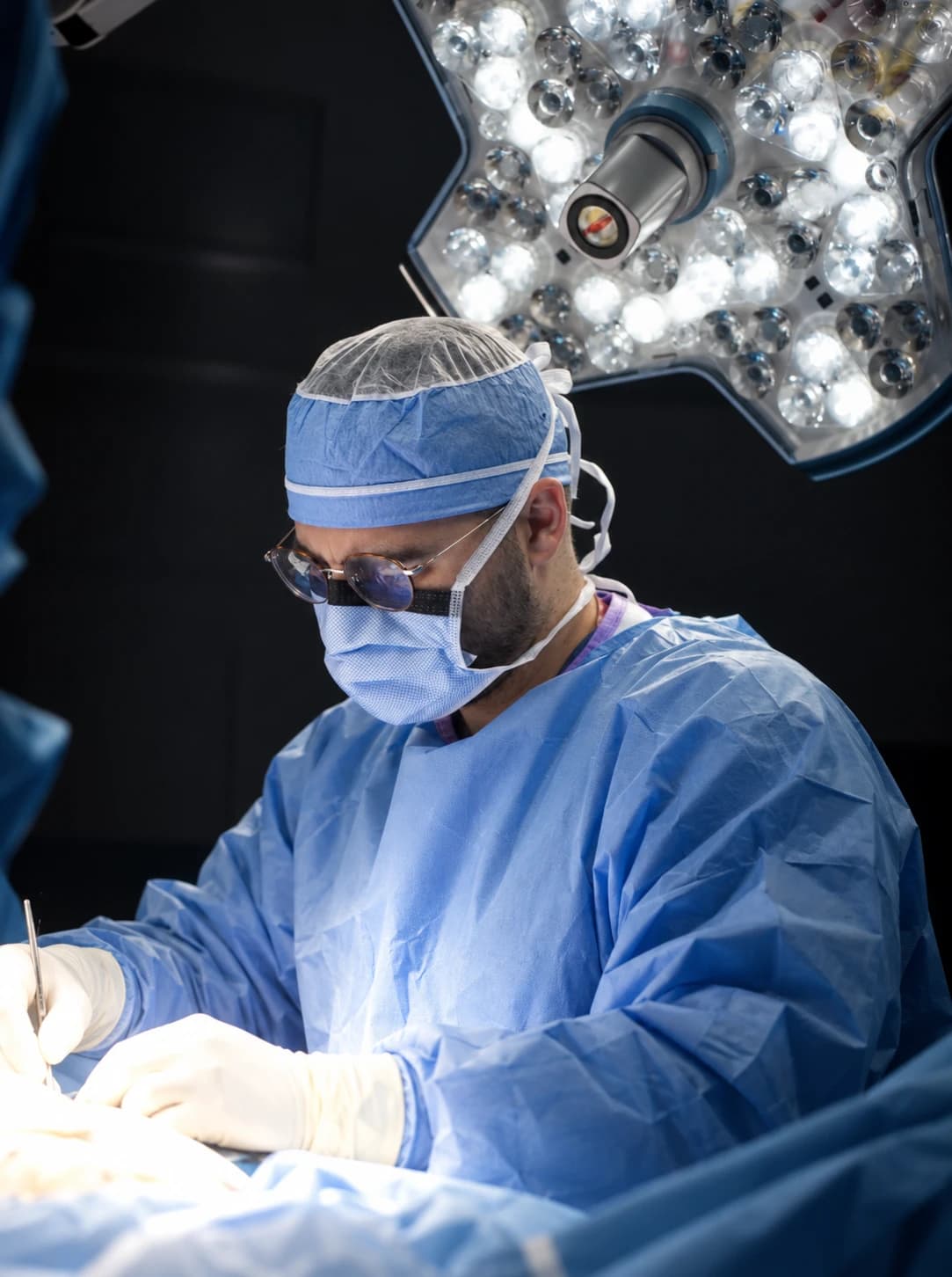
Reviewing surgeon
Foot and Ankle Surgeon at Center for Lower Extremity Surgery, a specialty practice of Ozturk Foot & Ankle. Dr. Ozturk is double board certified, as a Diplomate of the American Board of Podiatric Medicine (DABPM) and a Fellow of the Academy of Physicians in Wound Healing (FAPWH), and is a Fellow of the American Society of Podiatric Surgeons (FASPS) and the American Society of Podiatric Medicine (FASPM).
References
- 1.McCrum CL, Arner JW, Lesniak B, Bradley JP. Arthroscopic Anterior Ankle Decompression Is Successful in National Football League Players. Am J Orthop (Belle Mead NJ). 2018;47(1). PubMed 29447303 (external site)
- 2.Lee DH, Lee KB, Jung ST, Seon JK, Kim MS, Sung IH. Comparison of early versus delayed weightbearing outcomes after microfracture for small to midsized osteochondral lesions of the talus. Am J Sports Med. 2012;40(9):2023-2028. PubMed 22879399 (external site)
- 3.Arshad Z, Aslam A, Al Shdefat S, Khan R, Jamil O, Bhatia M. Complications following ankle arthroscopy. Bone Joint J. 2023;105-B(3):239-246. PubMed 36854323 (external site)
- 4.American Academy of Orthopaedic Surgeons. OrthoInfo Basics: Arthroscopy. OrthoInfo; 2019. orthoinfo.org (external site)
- 5.Zwiers R, Wiegerinck JI, Murawski CD, Fraser EJ, Kennedy JG, van Dijk CN. Arthroscopic Treatment for Anterior Ankle Impingement: A Systematic Review of the Current Literature. Arthroscopy. 2015;31(8):1585-1596. PubMed 25801044 (external site)
- 6.Yang M, Fei X, Li F, Du H. Systematic review of anterior ankle impingement: subtype-specific diagnosis & intervention. J Foot Ankle Surg. 2026;65(5):172.e1-172.e7. PubMed 42173479 (external site)
- 7.Anastasio AT, Baumann AN, Walley KC, Curtis DP, Johns WL, Amendola A. The Utilization of Minimally Invasive Surgery for Os Trigonum Syndrome: A Systematic Review. Am J Sports Med. 2024;52(8):2168-2177. PubMed 38348483 (external site)
- 8.Berveglieri L, Cerasoli T, Cassanelli E, Gaiani F, Faldini C, Vannini F. Evolving Trends in Return to Sport After Surgical Treatment of Osteochondral Lesions of the Talus: A Systematic Review and Meta-analysis Up To 2024. Clin Sports Med. 2025;44(3):613-632. PubMed 40514160 (external site)
- 9.Song M, Li S, Yang S, Dong Q, Lu M. Is Early or Delayed Weightbearing the Better Choice After Microfracture for Osteochondral Lesions of the Talus? A Meta-analysis and Systematic Review. J Foot Ankle Surg. 2021;60(6):1232-1240. PubMed 34215515 (external site)
- 10.Buck TMF, Dahmen J, Tak IJR, et al. Large variation in postoperative rehabilitation protocols following operative treatment of osteochondral lesions of the talus: A systematic review and meta-analysis on >200 studies. Knee Surg Sports Traumatol Arthrosc. 2024;32(2):334-343. PubMed 38294080 (external site)
This article is general health information and isn’t a substitute for advice from a clinician who knows your history. Read our medical disclaimer and how we review content.
Learn more about this
Treatment
Ankle arthroscopy
A camera-guided operation through tiny incisions to look inside the ankle and treat impingement, loose bodies and cartilage injuries.
Condition
Ankle cartilage lesions
Damage to the cartilage and bone on top of the ankle bone, usually after a sprain or fracture.
Treatment
Ankle cartilage repair
Operations that treat damaged cartilage on the ankle bone, from arthroscopic microfracture to grafts and cultured cells.
Treatment
Recovery after surgery
Weight-bearing, swelling, timelines by operation, driving, work and the warning signs to watch for.
Keep reading
Ankle
Ankle Ligament Reconstruction Surgery Recovery and Return to Sport
After a Broström repair, 95% of patients return to sport, on average in about 12 weeks. A week-by-week recovery guide, with what suture tape and arthroscopy add.
5 min read
Ankle
Ankle Sprain Not Healing? What Else It Could Be
Most sprains settle. When yours has not, the cause may be more than a stretched ligament. Here are the usual explanations and how they are sorted out.
6 min read
Before and after surgery
How to Prepare for Foot and Ankle Surgery: A Checklist
A practical checklist for the weeks before surgery: your health review, the risks you can change, setting up your home, and what to bring.
7 min read
On the Ozturk Foot & Ankle blog
General foot care and non-surgical basics, from our parent practice.