Is Winter the Right Time for Foot Surgery? Planning Recovery Around the Season
Winter suits many planned foot operations: boot season, holidays and the sports offseason. Season barely changes the medical risk, so don’t let the calendar delay surgery you need.
Medically reviewed by Dr. Efe Ozturk · Last reviewed
Published 7 min read
People ask about timing because recovery touches everything: work, family, driving, shoes and sport. This guide covers how to plan around the season, what the research says about winter, and what should never wait.
Is there a best time of year for foot surgery?
There is no medically required season. In a national surgical database, 2.3% of foot and ankle operations had a surgical complication. The rate was highest in summer (2.7%) and lowest in fall (2.1%), and the difference was not statistically significant.[2] That frees you to choose based on your life.
Winter often fits well:
- Boot season. A bulky dressing, surgical shoe or boot is less of a problem when everyone is in closed shoes and long pants.
- Holidays. Paid days off and a slower calendar can cover the first weeks, when you need to rest and keep the foot up.
- Sports offseason. For many athletes, recreational and competitive, the winter months are the quiet part of the year.
- Time indoors. You are home more anyway, so the weeks of limited walking cost less.
The real goal is a stretch of weeks you can protect. Waiting for a perfect month while pain limits your walking costs you time you will not get back.
When is a good time of year for bunion surgery?
Bunion surgery is a classic planned foot operation, and its timeline shows why winter can work well. Many bunion operations need a period without weight on the foot so the bone can heal, usually with crutches. Support from dressings or a brace lasts 6 to 12 weeks, and full recovery often takes up to 6 months.[1] Surgery in December or January puts that 6-month mark in June or July.
Be realistic about sandals. Some swelling is common from 6 months to a year after bunion surgery.[1] Your foot should be well along by summer, but it may not look finished.
Don’t keep postponing a painful bunion for the sake of timing. Bunions tend to progress: they don’t resolve on their own, and most worsen with time. Surgery is worth discussing when pain gets in the way of daily activities despite nonsurgical care.[3] See bunion surgery and our bunion surgery recovery timeline.
How do I plan around work, holidays and family?
- Map your first six weeks. Know who will drive you, shop and help at home.
- Talk to your employer early. Desk work usually comes back sooner than a job on your feet.
- Set up the house before the date. Clear walkways, move what you need to one floor and plan a spot to keep the foot raised.
- Plan for the holidays you will spend seated. Travel and long days standing in a kitchen don’t mix with a fresh repair.
Our checklist for preparing for surgery walks through the rest. Please call our office at 908-215-5953 to inquire about your insurance.
Can I drive after right foot surgery in winter?
Plan on rides. After bunion surgery, driving may be restricted until the bones have healed properly.[1] If the right foot is the one being operated on, that matters most, because it works the pedals. Winter roads add another reason not to rush. See when can I drive after foot or ankle surgery?
Ice, snow and crutches: how do I stay safe?
Falls are the hidden risk of a winter recovery. In a survey of 80 people who used a wheeled knee scooter after foot or ankle surgery or injury, 43% fell while using it, and most of those who fell did so more than once. Two-thirds had never been shown how to use the scooter.[4]
- Get instruction on your crutches, walker or scooter before surgery, and practice indoors.
- Stay in on icy days. Have someone salt and clear the path from the car to your door.
- Keep the dressing or cast dry with a waterproof cover.
- Never put weight on the foot until your surgeon says so.[1]
Do vitamin D and blood clots change the winter picture?
Vitamin D. It helps keep bones healthy.[5] In 577 people having planned foot and ankle surgery in the United Kingdom, only about 1 in 6 had a normal vitamin D level. Levels were lower in winter and highest in August.[6] In a small study of foot and ankle fusions, people low in vitamin D were 8.1 times more likely to have bones that did not join.[7] That evidence comes from retrospective studies, and no high-level trials have tested it.[5] It is still a fair question to ask whether your level should be checked, especially before a fusion.
Blood clots. Across 23 studies, clots in the veins were somewhat more frequent in winter than in summer.[8] Your surgeon weighs your personal clot risk before any operation, whatever the month.
What should never wait for a better season?
- A torn Achilles tendon. Repair has better results when it is done soon after the injury.[9]
- A painful bunion that limits you. It usually gets worse with time.[3]
- A new injury, wound or sign of infection. Get it checked now, and let the timing of any surgery follow the diagnosis.
What are the limits?
The seasonal research is thin and mixed. The summer bump in foot and ankle complications was small and not statistically significant.[2] Clots were modestly more common in winter.[8] In Sweden, death within 30 days of foot and ankle fracture surgery was rare (0.22%), and less likely for operations done in summer.[10] The vitamin D links come from retrospective studies.[5] Surgery is not recommended just to keep a bunion that doesn’t hurt from getting worse.[1] Your health, your job and your support at home matter more than the month.
Common questions
When should I schedule foot surgery?
Any time you can protect the recovery. Complication rates in a large database did not differ significantly by season.[2] Winter suits many people because of boots, holidays and the sports offseason.
Is there a best time of year for bunion surgery?
Many people choose late fall or winter. Full recovery often takes up to 6 months, so a December or January date reaches that point by early summer.[1]
How long will I need support after bunion surgery?
Expect dressings or a brace for 6 to 12 weeks, and some swelling for 6 months to a year.[1]
Is a knee scooter safe in the winter?
Falls are common, so use one with care. In one survey, 43% of knee scooter users fell, and two-thirds had no instruction.[4] Get trained before surgery and stay off icy ground.
The bottom line
Winter is a smart window for many planned foot operations, but the right time for surgery you need is the soonest date you can protect. Dr. Ozturk is a double board certified Foot and Ankle Surgeon and podiatrist who sees patients in Lyndhurst, Paramus and Millburn. Read about bunion care at our parent practice (external site), or request an appointment to plan your date.
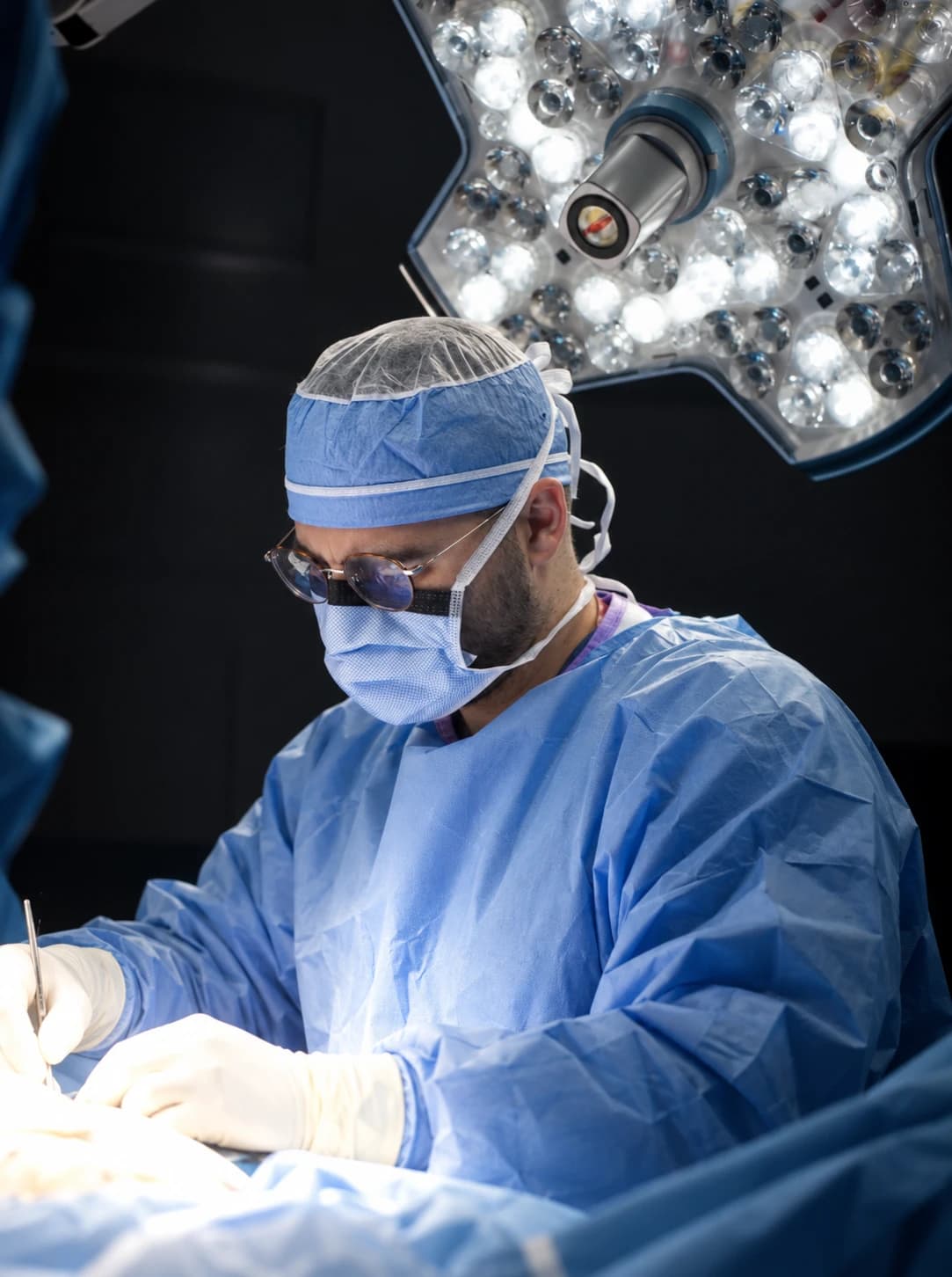
Reviewing surgeon
Foot and Ankle Surgeon at Center for Lower Extremity Surgery, a specialty practice of Ozturk Foot & Ankle. Dr. Ozturk is double board certified, as a Diplomate of the American Board of Podiatric Medicine (DABPM) and a Fellow of the Academy of Physicians in Wound Healing (FAPWH), and is a Fellow of the American Society of Podiatric Surgeons (FASPS) and the American Society of Podiatric Medicine (FASPM).
References
- 1.American Academy of Orthopaedic Surgeons. Bunion Surgery. OrthoInfo. orthoinfo.org (external site)
- 2.Huntley SR, Lee S, Kalra R, McGwin G, Naranje S, Shah A. Associations between season and surgical site infections in orthopaedic foot and ankle surgery. Foot (Edinb). 2018;37:61-64. PubMed 30326413 (external site)
- 3.American College of Foot and Ankle Surgeons. Bunions. FootHealthFacts. foothealthfacts.org (external site)
- 4.Yeoh JC, Ruta DJ, Murphy GA, et al. Analysis of Wheeled Knee Walker Use following Foot and Ankle Surgery or Injury. J Foot Ankle Surg. 2021;60(5):946-949. PubMed 33994082 (external site)
- 5.Giakoumis M. The Impact of Vitamin D Levels in Foot and Ankle Surgery. Clin Podiatr Med Surg. 2020;37(2):305-315. PubMed 32146986 (external site)
- 6.Aujla RS, Allen PE, Ribbans WJ. Vitamin D levels in 577 consecutive elective foot & ankle surgery patients. Foot Ankle Surg. 2019;25(3):310-315. PubMed 29409175 (external site)
- 7.Moore KR, Howell MA, Saltrick KR, Catanzariti AR. Risk Factors Associated With Nonunion After Elective Foot and Ankle Reconstruction: A Case-Control Study. J Foot Ankle Surg. 2017;56(3):457-462. PubMed 28476384 (external site)
- 8.Zhao H, Li Y, Wu M, et al. Seasonal variation in the frequency of venous thromboembolism: an updated result of a meta-analysis and systemic review. Phlebology. 2020;35(7):480-494. PubMed 32036737 (external site)
- 9.American Academy of Orthopaedic Surgeons. Achilles Tendon Rupture (Tear). OrthoInfo. orthoinfo.org (external site)
- 10.Lundin E, Karlsson J, Jakobsson JG. Lower all-cause 30-day mortality during summer following foot and ankle fracture surgery: a Swedish perioperative register-based study. Acta Orthop. 2025;96:601-605. PubMed 40772884 (external site)
This article is general health information and isn’t a substitute for advice from a clinician who knows your history. Read our medical disclaimer and how we review content.
Learn more about this
Treatment
Bunion surgery
Osteotomy, Lapidus fusion and minimally invasive options: how bunion operations are chosen, what recovery involves and what studies show.
Treatment
Preparing for surgery
Medical evaluation, smoking and diabetes, anesthesia, pain control, blood clots and getting your home ready.
Treatment
Recovery after surgery
Weight-bearing, swelling, timelines by operation, driving, work and the warning signs to watch for.
Keep reading
Before and after surgery
How to Prepare for Foot and Ankle Surgery: A Checklist
A practical checklist for the weeks before surgery: your health review, the risks you can change, setting up your home, and what to bring.
7 min read
Before and after surgery
When Can I Drive After Foot or Ankle Surgery?
The answer depends on which foot was operated on, what you are wearing and what you are taking. What research on braking shows, and how to decide.
6 min read
Toes and forefoot
Bunion Surgery Recovery: A Realistic Timeline
Recovery is measured in weeks to months, and it depends on the operation. A stage-by-stage look at what to expect and why plans differ.
6 min read
On the Ozturk Foot & Ankle blog
General foot care and non-surgical basics, from our parent practice.