Colton McKivitz’s Broken and Dislocated Ankle: Why Surgery Is the Usual Fix and How Long Recovery Takes
49ers right tackle Colton McKivitz is believed to have a fractured and dislocated left ankle. Here is why this injury is an emergency, why surgery is the usual fix, and how long recovery takes.
Medically reviewed by Dr. Efe Ozturk · Last reviewed
Published 7 min read
San Francisco 49ers right tackle Colton McKivitz was carted off in an air cast during the 49ers’ 35-10 win over the Minnesota Vikings in Mexico City on November 22. As Vikings linebacker Ivan Pace Jr. tackled Christian McCaffrey, the two appeared to roll into the back of his left leg.[4,5] ESPN reported what is believed to be a fractured and dislocated left ankle that will almost certainly end his season.[4] Coach Kyle Shanahan said, “We think it’s broken and dislocated, similar probably to Fred’s last year.”[4]
On November 23, ESPN’s Ian Rapoport reported a dislocated and fractured ankle; as of 9 a.m. Eastern, no report we found mentioned surgery, injured reserve or a recovery timeline.[6,4,5] We have no connection with any athlete in this article or their teams and have not examined them. The studies below describe groups of other patients, not a forecast for anyone in the news.
Shanahan was comparing it with linebacker Fred Warner, who, Shanahan said, had dislocated and fractured his ankle on October 12, 2025, an injury needing season-ending surgery.[7] Warner had the operation two days later, and Shanahan said it went well.[8] The 49ers opened his practice window on January 13, 2026, and in April he said he was back with no restrictions.[9] He played the 2026 season opener and made a game-high 11 tackles.[10]
What is a fracture-dislocation of the ankle?
Your ankle joint is a socket formed by the shin bone (tibia) and the thin outer leg bone (fibula), with the talus, the ankle bone below them, sitting inside it.[11] In a fracture-dislocation, one or more of these bones breaks and the talus is pushed out of the socket. Up to a third of fracture-dislocations are open injuries, meaning the skin is broken over the injury.[1]
Compared with a broken ankle that stays in place, fracture-dislocations bring more cartilage damage and loose bone pieces inside the joint, and, over time, more arthritis and chronic pain.[1] For the everyday broken ankle, see our parent practice’s guide to whether a broken ankle needs surgery or a cast (external site) and our page on ankle and foot fractures.
Why is a broken and dislocated ankle an emergency?
A visibly dislocated ankle should be put back in place (reduced) as early as possible. That lowers the risk of nerve, blood vessel and skin problems and avoids delaying surgery.[1] The first exam checks blood flow, feeling and the skin for wounds or bone pressing from inside. Reduction is often done in the emergency department with numbing medicine or sedation, followed by a splint.[1] An open fracture is an emergency of its own, because dirt that gets into the bone raises the risk of infection.[2]
Does a dislocated ankle require surgery?
When the ankle breaks and dislocates, usually yes: most ankle fractures with dislocations need surgery.[2] The goal is to restore the joint’s alignment and stability and lower the risk of arthritis later.[11] In ORIF, the surgeon realigns the bones and holds them with a plate and screws, or sometimes a rod or nail. If the syndesmosis, the ligaments that bind the two leg bones above the ankle, is also torn, it is fixed with one or more screws or a suture button.[2] See fracture surgery.
Accuracy is the heart of the operation. In an 18-year follow-up after ORIF, fracture-dislocation was a risk factor for advanced arthritis, and with three or more risk factors the chance of it was 60% to 70%.[12] When the syndesmosis healed out of line, patients scored worse at two years or more.[13]
What are the results after broken and dislocated ankle surgery?
In a 2025 review of 21 studies and 810 ankle fracture-dislocations, the pooled ankle score across 13 of them was 81.5 out of 100, which the authors rated as good.[14]
In a series of 14 NFL players, 9 of them offensive linemen, ankle fracture surgery included a plate on the fibula, suture-button fixation of the syndesmosis and repair of the torn deltoid ligament on the inner ankle. All returned to running and cutting by 6 months, 86% returned to play, and no complications were noted.[3] In 31 NFL players operated on for ankle fractures, 71% returned, and those who returned performed no differently than before or than uninjured players.[15]
In 142 people aged 18 to 65 followed for a year after ORIF for any ankle fracture, 97% of those who had jobs were back at work.[16]
Broken and dislocated ankle recovery time
Your surgeon sets the timing for your fracture, because weight on the ankle too early can let the bones shift.[2]
- The first 6 weeks. In a trial of 160 patients after ORIF, walking in a boot from the day after surgery gave better 6-week function, an earlier return to work and similar complications, compared with 6 weeks in a cast without weight.[17]
- 6 to 12 weeks. Early healing takes at least 6 weeks and complete healing 10 to 12.[2]
- 3 to 4 months. Most people return to normal activities. Sports take longer, and full recovery can take up to 2 years.[2]
- About 6 months. In the NFL series, every player was running and cutting by then.[3]
Read how to walk after broken ankle surgery and whether ankle plates and screws need to come out. We have on-site X-ray and ultrasound; see foot and ankle imaging.
What are the limits?
Fracture-dislocations still do worse than simpler fractures. In the 2025 review, 29.2% developed arthritis, 12.6% had bones that healed out of position or did not heal, 7.3% had wound infections, and no study of these injuries reported on return to work.[14] In that study, only 52% were back to their earlier activity level.[16] Casting can work for some unstable fractures: in 620 adults over 60, a closely molded cast gave the same function at 6 months as surgery, with fewer infections and wound problems (1% vs 10%), but more malunion (15% vs 3%), and 19% of those cast later switched to surgery.[18] A 2026 trial that found casting as good as surgery for one type of fibula fracture excluded fracture-dislocations.[19]
Other foot and ankle injuries this weekend
- Luke Talich, Notre Dame safety. He tore his right Achilles tendon in the 24-3 win over SMU on Saturday, November 21, and testing on Sunday confirmed the tear, per ESPN’s sources.[20] WNDU reported the injury as season-ending.[21] As of November 23, we found no report of surgery. See Achilles rupture: surgery or not.
- Bhayshul Tuten, Jacksonville Jaguars running back. He left in the second half of the 23-18 loss to the New York Giants on November 22 and did not return. The team’s site noted he had been dealing with a foot and ankle injury for a few weeks.[22] No diagnosis had been reported.
Common questions
How long does a broken and dislocated ankle take to heal?
Complete bone healing usually takes 10 to 12 weeks, normal activities return in 3 to 4 months, and full recovery can take up to 2 years.[2]
Does a dislocated ankle require surgery?
When it comes with a fracture, usually yes.[2]
What is the dislocated ankle recovery time in the NFL?
In one NFL series of ankle fracture surgery, all players were running and cutting by 6 months, and 86% returned to play.[3]
What is the latest Colton McKivitz injury update?
As of November 23, ESPN reports a fractured and dislocated left ankle that will almost certainly end his season; no surgery or injured reserve move had been reported.[4,6]
The bottom line
A broken and dislocated ankle needs emergency reduction, then, in most cases, surgery that restores the joint precisely. Whether your ankle needs fixation is a decision Dr. Ozturk makes after examining it and reviewing your imaging. Dr. Ozturk is a double board certified Foot and Ankle Surgeon and podiatrist who sees patients in Lyndhurst, Paramus and Millburn. Request an appointment.
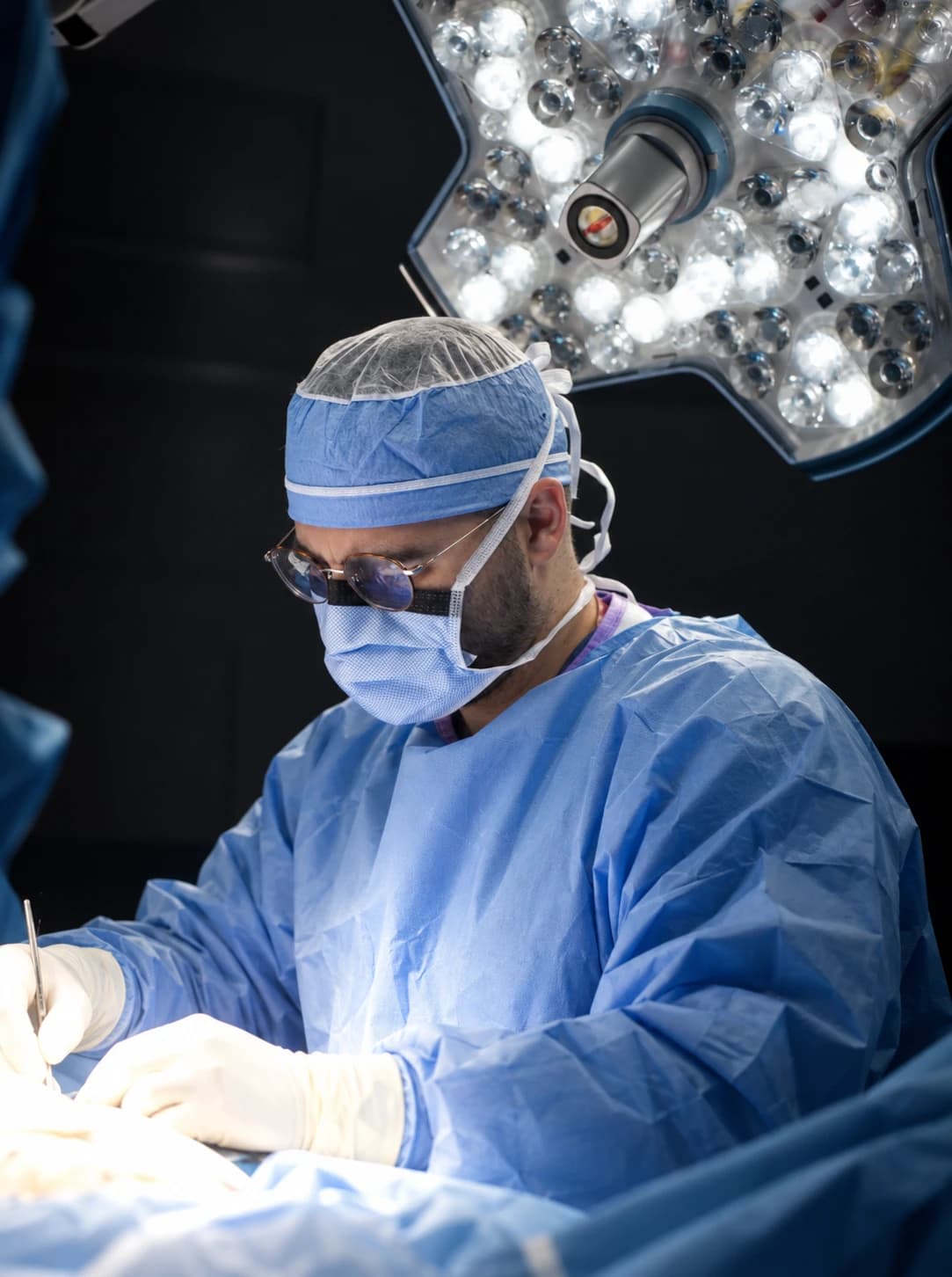
Reviewing surgeon
Foot and Ankle Surgeon at Center for Lower Extremity Surgery, a specialty practice of Ozturk Foot & Ankle. Dr. Ozturk is double board certified, as a Diplomate of the American Board of Podiatric Medicine (DABPM) and a Fellow of the Academy of Physicians in Wound Healing (FAPWH), and is a Fellow of the American Society of Podiatric Surgeons (FASPS) and the American Society of Podiatric Medicine (FASPM).
References
- 1.Lawson KA, Ayala AE, Morin ML, Latt LD, Wild JR. Republication of “Ankle fracture-dislocations: a review.” Foot Ankle Orthop. 2023;8(3):24730114231195058. PubMed 37582190 (external site)
- 2.American Academy of Orthopaedic Surgeons. Ankle Fractures (Broken Ankle). OrthoInfo. orthoinfo.org (external site)
- 3.Hsu AR, Lareau CR, Anderson RB. Repair of acute superficial deltoid complex avulsion during ankle fracture fixation in National Football League players. Foot Ankle Int. 2015;36(11):1272-1278. PubMed 26160387 (external site)
- 4.Wagoner N. 49ers’ Colton McKivitz suffers season-ending ankle injury. ESPN. Published November 22, 2026. espn.com (external site)
- 5.Martin A. 49ers coach Kyle Shanahan provides update on ‘crushing’ Colton McKivitz injury. NBC Sports Bay Area. Published November 22, 2026. nbcsportsbayarea.com (external site)
- 6.Rapoport I. 49ers OT Colton McKivitz suffered a dislocated and fractured ankle in last night’s win. ESPN. Published November 23, 2026. espn.com (external site)
- 7.Williams C. Fred Warner’s season is over with dislocated and fractured ankle. NBC Sports (ProFootballTalk). Published October 12, 2025. nbcsports.com (external site)
- 8.Simmons M. Kyle Shanahan: Fred Warner’s surgery went great. NBC Sports (ProFootballTalk). Published October 15, 2025. nbcsports.com (external site)
- 9.Wagoner N. Niners’ Fred Warner fully healthy after season-ending injury. ESPN via ABC7 News. Published April 20, 2026. abc7news.com (external site)
- 10.Maiocco M. 49ers coach Kyle Shanahan identifies what makes ‘freak’ Fred Warner so special. NBC Sports Bay Area. Published September 18, 2026. nbcsportsbayarea.com (external site)
- 11.Hermena S, Slane VH. Ankle Fracture. In: StatPearls. StatPearls Publishing; 2025. PubMed 31194464 (external site)
- 12.Lübbeke A, Salvo D, Stern R, Hoffmeyer P, Holzer N, Assal M. Risk factors for post-traumatic osteoarthritis of the ankle: an eighteen year follow-up study. Int Orthop. 2012;36(7):1403-1410. PubMed 22249843 (external site)
- 13.Sagi HC, Shah AR, Sanders RW. The functional consequence of syndesmotic joint malreduction at a minimum 2-year follow-up. J Orthop Trauma. 2012;26(7):439-443. PubMed 22357084 (external site)
- 14.Barber HF, Randall ZD, Strok MJ, Goldfarb JH, Yaeger L, Berkes MB. Functional outcomes after ankle fracture-dislocation: a systematic review. Arch Orthop Trauma Surg. 2025;145(1):117. PubMed 39797975 (external site)
- 15.Robbins JB, Jupiter DC, Panchbhavi VK, Weiss WM, Hagedorn JC 2nd, Chen J. Return to play rates following operative ankle fractures differ between high- and low-performing National Football League athletes. Orthopedics. 2024;47(1):22-27. PubMed 37216567 (external site)
- 16.Ramadi A, Beaupre LA, Heinrichs L, Pedersen ME. Recovery and return to activity 1 year after ankle fracture managed with open reduction and internal fixation: a prospective longitudinal cohort study. Foot Ankle Orthop. 2022;7(2):24730114221091806. PubMed 35464787 (external site)
- 17.Khojaly R, Rowan FE, Shah V, et al. Immediate Weight-Bearing Compared with Non-Weight-Bearing After Operative Ankle Fracture Fixation: Results of the INWN Pragmatic, Randomized, Multicenter Trial. J Bone Joint Surg Am. 2025;107(13):1423-1438. PubMed 40408465 (external site)
- 18.Willett K, Keene DJ, Mistry D, et al. Close Contact Casting vs Surgery for Initial Treatment of Unstable Ankle Fractures in Older Adults: A Randomized Clinical Trial. JAMA. 2016;316(14):1455-1463. PubMed 27727383 (external site)
- 19.Kortekangas T, Lehtola R, Leskelä HV, et al. Cast immobilisation versus surgery for unstable lateral malleolus fractures (SUPER-FIN): randomised non-inferiority clinical trial. BMJ. 2026;392:e085295. PubMed 41534905 (external site)
- 20.Thamel P, Rittenberg A. Sources: Notre Dame loses safety Luke Talich to torn Achilles. ESPN. Published November 22, 2026. espn.com (external site)
- 21.WNDU Staff. Reports: Notre Dame safety Luke Talich suffers season-ending Achilles injury. WNDU 16 News Now. Published November 22, 2026. wndu.com (external site)
- 22.Oehser J, Sexton B, Stevens K, Shipley J. Quick thoughts after Jaguars’ 23-18 loss to Giants: “A reality check…” Jacksonville Jaguars. Published November 22, 2026. jaguars.com (external site)
This article is general health information and isn’t a substitute for advice from a clinician who knows your history. Read our medical disclaimer and how we review content.
Learn more about this
Condition
Ankle and foot fractures
Breaks of the ankle and foot bones, from small cracks that heal in a boot to unstable injuries that need surgery.
Treatment
Fracture surgery
When a broken ankle or foot needs an operation, how bones are held while they heal, and what recovery involves.
Treatment
Recovery after surgery
Weight-bearing, swelling, timelines by operation, driving, work and the warning signs to watch for.
Diagnosis guide
Foot and ankle imaging
What X-rays, weight-bearing imaging, CT, MRI and ultrasound show, and how the right test is chosen.
Keep reading
Ankle
How to Walk After Broken Ankle Surgery: A Weight-Bearing Timeline
Plates and screws let many people put weight on a fixed ankle within days or weeks. What the trials show, and the stages from walking boot to your own shoes.
6 min read
Ankle
Ankle Plates and Screws: Do They Need to Come Out After Fracture Surgery?
Most ankle plates and screws can stay in place, but when they hurt, removal is a short operation that helps many people. Who benefits, when it is done and what the trials show.
6 min read
Ankle
TightRope Surgery for High Ankle Sprain: Suture Button Results and Recovery
When a high ankle sprain leaves the shin bones unstable, a suture button holds them together. In 16 randomized trials it had fewer complications and reoperations than screws.
6 min read
On the Ozturk Foot & Ankle blog
General foot care and non-surgical basics, from our parent practice.