Flat Foot Surgery Recovery Time: Does Flat Foot Surgery Work?
Flatfoot reconstruction combines a heel-bone shift, tendon transfer and other procedures to rebuild a collapsing arch. In a 15-year study, 87% were pain-free and functioning well; healing takes 6 months or more.
Medically reviewed by Dr. Efe Ozturk · Last reviewed
Published 7 min read
A painful adult flat foot is usually an arch that is slowly giving way. Experts now call it progressive collapsing foot deformity, or PCFD. It used to be called adult-acquired flatfoot or posterior tibial tendon dysfunction.[5] The inner arch collapses, the heel tilts outward and the front of the foot drifts outward, and it mostly affects middle-aged and older adults.[6] We perform flatfoot reconstruction for this problem. Here is whether it works, how it works, whether it hurts and how long recovery takes.
Does flat foot surgery work?
Yes. Most patients have good results.[2] The long-term numbers:
- 15 years. After a flexor digitorum longus tendon transfer and a heel-bone shift, average scores rose from 48 to 90 out of 100, and 27 of 31 patients (87%) were pain-free and functioning well.[1]
- 10 years. In 102 feet treated with tendon repair or transfer plus a heel-bone shift or a lateral column lengthening, 86% of patients were satisfied or satisfied with minor reservations, with an average score of 89 out of 100.[7]
- 2 years. After a tendon transfer, two heel-bone cuts and a calf release, patients were highly satisfied, every outcome measure improved, and push-off strength was not lost.[3]
Alignment matters. A review of six studies found that restoring the shape of the foot may go along with better patient-reported results.[8]
What is flat foot reconstruction surgery?
It is a plan built from several procedures, each correcting one part of the collapse.[2] Surgeons agree that the main goals are realigning and balancing the foot. Saving joint motion is preferred when possible, but a stable, well-aligned foot comes first.[9] Nonsurgical care such as bracing and inserts is the usual first step. Surgery should be considered if pain does not get better after several months of appropriate treatment.[2] See adult-acquired flatfoot and nonsurgical care.
How does flat foot surgery work?
Your plan depends on how flexible your foot is, whether there is arthritis and how severe the deformity is.[2] These are the building blocks.
- Medializing calcaneal osteotomy. The heel bone is cut and shifted inward, back under the center of the ankle. It is one of the most common flatfoot procedures.[2]
- Tendon transfer. The damaged posterior tibial tendon, the main tendon holding up the arch, is replaced or reinforced with a nearby tendon, most often the flexor digitorum longus, which bends the small toes. Your toes still move, and most people do not notice a change in their walk.[2]
- Lateral column lengthening. The outer part of the heel bone is lengthened with a wedge of bone graft. This swings the front of the foot back to center.[2] A review of 21 studies found excellent clinical and X-ray results, and advised keeping the graft under 8 mm so the outer foot is not over-lengthened.[10]
- Spring ligament repair. The main ligament under the arch is repaired, often with strong stitches for support.[2]
- Calf lengthening. Releasing a tight calf muscle can help keep the flatfoot from returning.[2] See gastrocnemius recession.
- Subtalar arthroereisis, where it fits. A small implant is placed in a space between the heel bone and the ankle bone to block collapse. In adults it is rarely used alone. Combined with other procedures, good clinical and X-ray results can be expected.[11] A second review of nine studies found improved scores in every study.[12]
- Fusion for a rigid foot. When the flatfoot is stiff or arthritic, bone cuts and tendon transfers are not enough. Fusing the hindfoot joints, for example in a triple arthrodesis, realigns the foot and removes the arthritis. Because these joints have usually lost most of their motion already, patients should walk better with less pain, and up-and-down ankle motion is not greatly affected.[2]
This is why seeing a Foot and Ankle Surgeon early matters. A flexible foot can be corrected with joint-sparing bone cuts and tendon work, while a foot that has stiffened may need fusion.[2]
Flat foot surgery recovery time
Your surgeon sets the schedule for your operation. Here is what studies describe.
- The first days. After major ankle and hindfoot surgery done with a nerve block behind the knee, average pain scores in a randomized trial stayed low, between 1.1 and 3.6 out of 10, over the first three days.[13]
- The first weeks. The most important rule is not to walk on the foot until your surgeon says it is safe.[2] For crutches, scooters and the switch to a boot, see recovery after foot and ankle surgery.
- About 6 months. Healing is complete and pain is much better in most patients by 6 months or later.[2]
- About 1 year. Results that were already better at 6 months kept improving at one year and mostly leveled off by two years.[3]
- Sports. In 82 adults, the median time back to sports and exercise was 9 to 12 months, and 12 to 18 months to reach the highest pre-surgery level. Nearly 6 in 10 (58.5%) found physical activity easier after surgery.[4]
Does flat foot surgery hurt?
There is real pain after any major foot and ankle operation, and modern pain control is built around it. A review of 45 randomized trials found that nerve blocks, numbing medicine in the wound, acetaminophen, anti-inflammatory medicines and a dose of dexamethasone (a steroid) all improve pain relief, with opioids kept as a backup. For extensive surgery, it recommends a nerve block behind the knee.[14] In the trial above, pain scores after this kind of block stayed low through the first three days.[13]
What are the limits?
The most common complaint is that pain is not completely gone, and the foot may not look perfectly “normal.” Bones may fail to heal (nonunion), wounds can become infected, and people with diabetes or who smoke face higher risk.[2] In the sports study, 25.6% found physical activity harder after surgery.[4] After triple arthrodesis, average pain fell from 5.4 to 2.6 out of 10, but physical function scores stayed below the general population’s.[15] With subtalar implants, one review found complications were common, mainly pain at the implant site on the outer side of the hindfoot.[11] The six studies in the alignment review all looked back at past patients (retrospective studies).[8]
Common questions
What is the recovery time for flat foot surgery?
Plan on 6 months or more for healing and major pain relief, about a year for most of the improvement, and 9 to 12 months to return to sports.[2,3,4]
Does flat foot surgery work?
For most people, yes. In one 15-year study, 87% were pain-free and functioning well.[1]
What is flat foot reconstruction surgery called?
It is usually called flatfoot reconstruction or PCFD reconstruction. It combines procedures such as a heel-bone osteotomy, a tendon transfer and, for a stiff foot, a fusion such as triple arthrodesis.[2]
Does flat foot surgery hurt?
There is pain in the first days, but nerve blocks and combined pain medicines lower it. In one trial, average scores stayed between 1.1 and 3.6 out of 10.[14,13]
The bottom line
When a collapsing arch keeps hurting despite braces and inserts, reconstruction realigns the foot and gives most people lasting relief. Recovery takes months, but the results hold for well over a decade in long-term studies. Dr. Ozturk is a double board certified Foot and Ankle Surgeon and podiatrist who sees patients in Lyndhurst, Paramus and Millburn. Our parent practice explains flat feet treatment for adults (external site). You can request an appointment here. Please call our office at 908-215-5953 to inquire about your insurance.
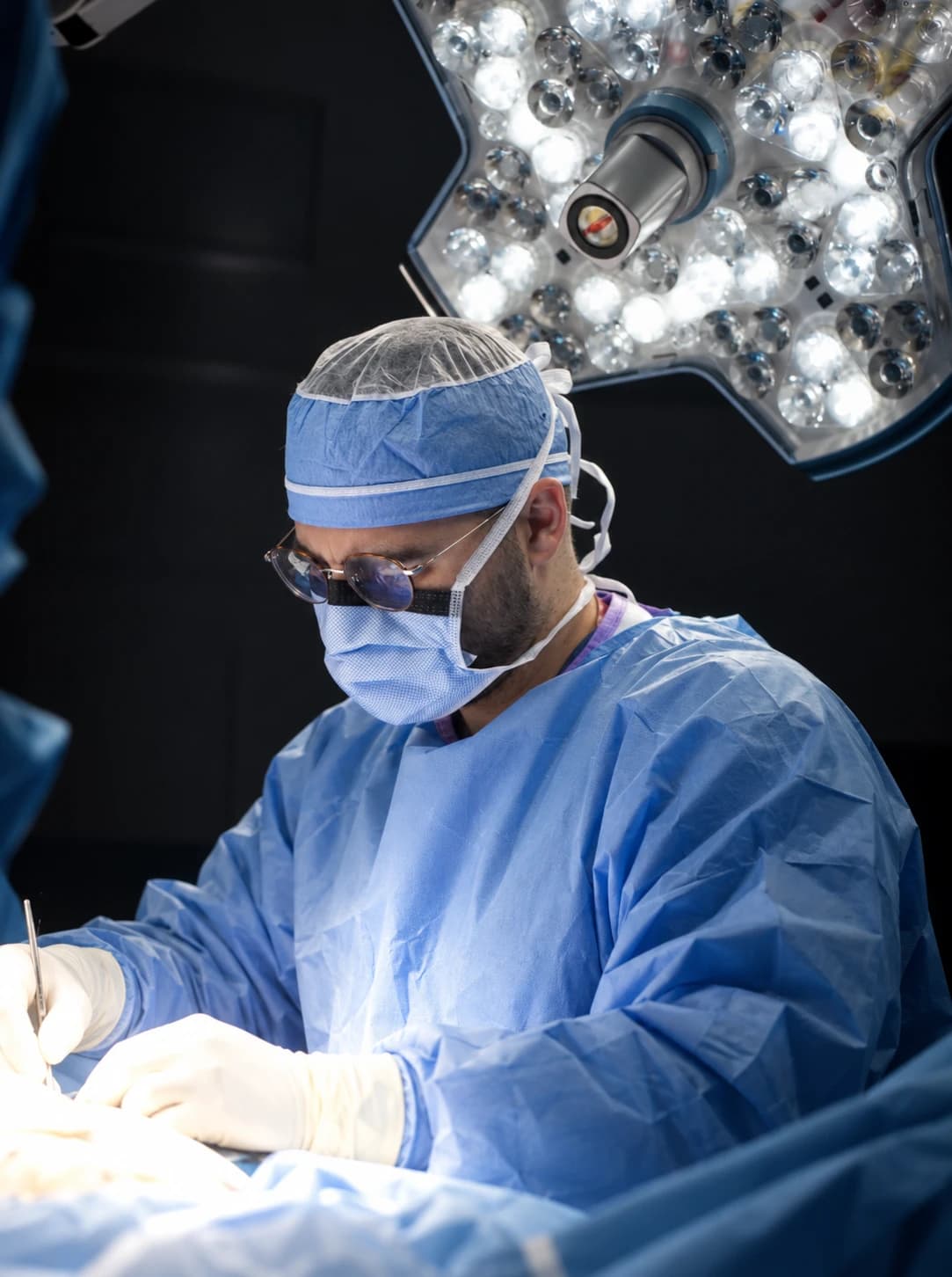
Reviewing surgeon
Foot and Ankle Surgeon at Center for Lower Extremity Surgery, a specialty practice of Ozturk Foot & Ankle. Dr. Ozturk is double board certified, as a Diplomate of the American Board of Podiatric Medicine (DABPM) and a Fellow of the Academy of Physicians in Wound Healing (FAPWH), and is a Fellow of the American Society of Podiatric Surgeons (FASPS) and the American Society of Podiatric Medicine (FASPM).
References
- 1.Chadwick C, Whitehouse SL, Saxby TS. Long-term follow-up of flexor digitorum longus transfer and calcaneal osteotomy for stage II posterior tibial tendon dysfunction. Bone Joint J. 2015;97-B(3):346-352. PubMed 25737518 (external site)
- 2.American Academy of Orthopaedic Surgeons. Progressive Collapsing Foot Deformity (Adult-Acquired Flatfoot). OrthoInfo. orthoinfo.org (external site)
- 3.Kou JX, Balasubramaniam M, Kippe M, Fortin PT. Functional results of posterior tibial tendon reconstruction, calcaneal osteotomy, and gastrocnemius recession. Foot Ankle Int. 2012;33(7):602-611. PubMed 22835399 (external site)
- 4.Fuller RM, Eble SK, Day J, et al. Return to physical activity following flatfoot reconstruction. Foot Ankle Int. 2022;43(6):772-782. PubMed 35259974 (external site)
- 5.Myerson MS, Thordarson DB, Johnson JE, et al. Classification and nomenclature: progressive collapsing foot deformity. Foot Ankle Int. 2020;41(10):1271-1276. PubMed 32856474 (external site)
- 6.Mc Donald S, Loveday D, Smith G, Bawa A. Progressive collapsing foot deformity: an instructional review. Eur J Orthop Surg Traumatol. 2026;36(1):224. PubMed 42257901 (external site)
- 7.Ruffilli A, Traina F, Giannini S, Buda R, Perna F, Faldini C. Surgical treatment of stage II posterior tibialis tendon dysfunction: ten-year clinical and radiographic results. Eur J Orthop Surg Traumatol. 2018;28(1):139-145. PubMed 28698915 (external site)
- 8.Poutoglidou F, Marsland D, Elliot R. Does foot shape really matter? Correlation of patient reported outcomes with radiographic assessment in progressive collapsing foot deformity reconstruction: a systematic review. Foot Ankle Surg. 2024;30(6):441-449. PubMed 38514277 (external site)
- 9.Sangeorzan BJ, Hintermann B, de Cesar Netto C, et al. Progressive collapsing foot deformity: consensus on goals for operative correction. Foot Ankle Int. 2020;41(10):1299-1302. PubMed 32851848 (external site)
- 10.Modha RK, Kilmartin TE. Lateral column lengthening for flexible adult acquired flatfoot: systematic review and meta-analysis. J Foot Ankle Surg. 2021;60(6):1254-1269. PubMed 34253434 (external site)
- 11.Mattesi L, Ancelin D, Severyns MP. Is subtalar arthroereisis a good procedure in adult-acquired flatfoot? A systematic review of the literature. Orthop Traumatol Surg Res. 2021;107(6):103002. PubMed 34216843 (external site)
- 12.Baryeh KW, Ismail H, Sobti A, Harb Z. Outcomes following the use of subtalar arthroereisis in the correction of adult acquired flatfoot: a systematic review. Foot Ankle Spec. 2022;15(4):384-393. PubMed 33511862 (external site)
- 13.Elliot R, Pearce CJ, Seifert C, Calder JD. Continuous infusion versus single bolus popliteal block following major ankle and hindfoot surgery: a prospective, randomized trial. Foot Ankle Int. 2010;31(12):1043-1047. PubMed 21189203 (external site)
- 14.Wang J, Liu GT, Mayo HG, Joshi GP. Pain management for elective foot and ankle surgery: a systematic review of randomized controlled trials. J Foot Ankle Surg. 2015;54(4):625-635. PubMed 24954920 (external site)
- 15.Sakkab R, MacRae TM, Diaz R, Cullen BD. Patient reported outcomes following triple arthrodesis for adult acquired flat foot deformity: minimum two year follow up. J Foot Ankle Surg. 2024;63(3):319-323. PubMed 38097009 (external site)
This article is general health information and isn’t a substitute for advice from a clinician who knows your history. Read our medical disclaimer and how we review content.
Learn more about this
Treatment
Flatfoot reconstruction
A combination of tendon, ligament and bone procedures that rebuilds the arch and realigns the foot.
Condition
Adult-acquired flatfoot
An arch that gradually collapses in adulthood, often with pain along the inner ankle and a heel that tilts outward.
Treatment
Gastrocnemius recession
Lengthening a tight calf muscle so the ankle can bend upward, relieving strain on the heel, arch and forefoot.
Treatment
Recovery after surgery
Weight-bearing, swelling, timelines by operation, driving, work and the warning signs to watch for.
Treatment
Non-surgical care
Footwear, inserts, exercise, medication, injections and shockwave: how conservative care works and when to reassess.
Keep reading
Before and after surgery
How to Prepare for Foot and Ankle Surgery: A Checklist
A practical checklist for the weeks before surgery: your health review, the risks you can change, setting up your home, and what to bring.
7 min read
Before and after surgery
Smoking, Diabetes and Foot Surgery Healing: What to Know
Two of the biggest risks for a healing problem are ones you can act on. What the research shows about smoking, blood sugar and nerve damage.
6 min read
Before and after surgery
When Can I Drive After Foot or Ankle Surgery?
The answer depends on which foot was operated on, what you are wearing and what you are taking. What research on braking shows, and how to decide.
6 min read
On the Ozturk Foot & Ankle blog
General foot care and non-surgical basics, from our parent practice.