Plantar Fasciitis Surgery: When It’s an Option
Most heel pain improves without an operation. When it has not, here is what surgery involves, what the evidence shows, and what to check first.
Medically reviewed by Efe Ozturk, DPM · Last reviewed
Published 6 min read
Heel pain that lasts through a year of stretching, shoe changes and rest is exhausting, and it is reasonable to ask whether surgery is the answer. Sometimes it is a real option. More often, the useful questions are whether the diagnosis is right, whether the non-surgical care was really thorough, and whether something else, such as a tight calf, is keeping the pain going. This article walks through those questions. For the condition itself, see plantar fasciitis.
First, make sure it is plantar fasciitis
Plantar fasciitis typically hurts at the inner part of the heel and is sharpest with the first steps after getting up or sitting for a while.[1,2] But heel pain has a long list of possible causes. A stress fracture of the heel bone, entrapment of a nerve (burning, tingling or numbness), a bruised fat pad, a wart, or a problem with the Achilles tendon behind the heel can all be mistaken for it.[2] Most heel pain is mechanical, but neurologic, arthritic, traumatic and infectious causes must be considered.[3]
If your pain has burning, tingling or numbness, our sister specialty practice, Lower Extremity Nerve Institute (external site), evaluates nerve conditions of the foot and ankle. A secure diagnosis is the foundation for any decision about surgery, so a second look at it is worth the time.
What “thorough” non-surgical care means
“Aggressive” or “thorough” means each of the main treatments has had a fair trial, usually in a stepped order:
- Stretching and education. Stretching the plantar fascia and the calf, with advice about footwear and activity, is the core of self-management. Plantar fascia stretching and taping reduced first-step pain in the short term.[4]
- Footwear, cushioning and inserts. Foot orthoses reduced pain more than sham orthoses in the medium term, though it is uncertain whether the change is large enough to matter, and custom and off-the-shelf types performed similarly.[5]
- Night splints, rest from aggravating activity and anti-inflammatory medicine, used by many people, especially early on.[1]
- Shockwave therapy. In a large meta-analysis, shockwave was the treatment that improved pain in the medium and long term.[6,4]
- Injections. A corticosteroid injection can reduce pain in the short term, but the benefit beyond a few weeks is not clear, so repeat injections are limited.[7]
Improvement is often slow, and each step needs weeks, not days. If you want the basics in detail, our parent practice has articles on plantar fasciitis stretches (external site) and shockwave therapy (external site), and our own guide to non-surgical treatment covers what to expect from each.
When surgery becomes a fair question
Surgery is generally considered for people who have not improved after about 12 months of thorough non-surgical care.[1] In practice, that means the pain still limits what you need to do, the diagnosis is secure, and the treatments above have each been tried properly. Your surgeon can tell you whether anything about your situation changes that timeline.
The operations
Two operations are used most often.[1]
- Partial release of the plantar fascia, done through an open incision, an endoscope or a small percutaneous approach, relieves tension where the band attaches to the heel.
- Lengthening of the calf muscle (gastrocnemius recession) reduces tension across the heel and is aimed at a tight calf, one of the risk factors for the problem.[1] It is evaluated by measuring how far the ankle bends with the knee bent and straight, and it is described in gastrocnemius recession.[8]
What the evidence shows
- A network meta-analysis of 21 studies of surgery for stubborn plantar fasciitis found that endoscopic approaches gave greater improvement than open or percutaneous ones, and that gastrocnemius recession gave better pain scores than the other mechanisms. The studies had a moderate to high risk of bias, so the findings need caution.[9]
- A systematic review of gastrocnemius recession found a consistent reduction in pain (about 76% at 12 months in the four studies that measured it) and no major complications, but the study designs were of low quality.[10]
- A meta-analysis of five randomized trials (150 patients) found significant improvements in function, pain and ankle motion after gastrocnemius recession, with advantages over plantar fascia release for recovery.[11]
The message from all three is the same: the results look good, but they come from studies that are small or at risk of bias, so nobody can promise a particular result.
Trade-offs and risks
Calf lengthening carries the trade-offs of weakness of the calf that may not fully recover, and a risk of irritation of the sural nerve, which supplies sensation to the outer foot.[12,13] After any heel operation, recovery includes a period of protected weight-bearing, and although good outcomes are typical, chronic pain can persist.[1] As with all surgery, infection, wound problems and anesthesia risks are discussed beforehand; see how to prepare for foot and ankle surgery for what you can do to lower them.
Questions to ask your surgeon
- How sure are you that plantar fasciitis is the cause, and what else did you consider?
- Is my calf tight, and does that change which operation you recommend?
- Which operation do you recommend, and what does the evidence say about it?
- What are the specific risks for me, and how long is the recovery?
- What non-surgical treatment is still worth trying, and for how long?
A second opinion is reasonable before an elective heel operation; see second opinions before foot or ankle surgery.
Common questions
How long should I try non-surgical care?
Surgery is generally saved for people who have not improved after about 12 months of thorough non-surgical treatment.[1]
Will a cortisone shot help?
It can reduce pain in the short term, but the benefit is not clear beyond a few weeks. Because injections have possible side effects, the benefits and risks are discussed first, and repeat injections are limited.[7]
Does shockwave therapy work?
In a large meta-analysis of treatments for plantar fasciitis, shockwave was the one that improved pain in the medium and long term.[6]
Is a tight calf part of the problem?
It can be. A tight calf is a recognized risk factor, and lengthening the calf is one of the operations used for stubborn cases.[1,8]
What if my heel pain burns or tingles?
That points toward a nerve as a possible cause and is worth evaluating before any operation on the fascia.[2]
The bottom line
Plantar fasciitis surgery is for a small minority: people whose pain has lasted about a year, despite thorough non-surgical care, and whose diagnosis is secure. The operations have encouraging results in studies of modest quality, and they come with trade-offs. The most important steps come before surgery: an accurate diagnosis and a real trial of the treatments that help.
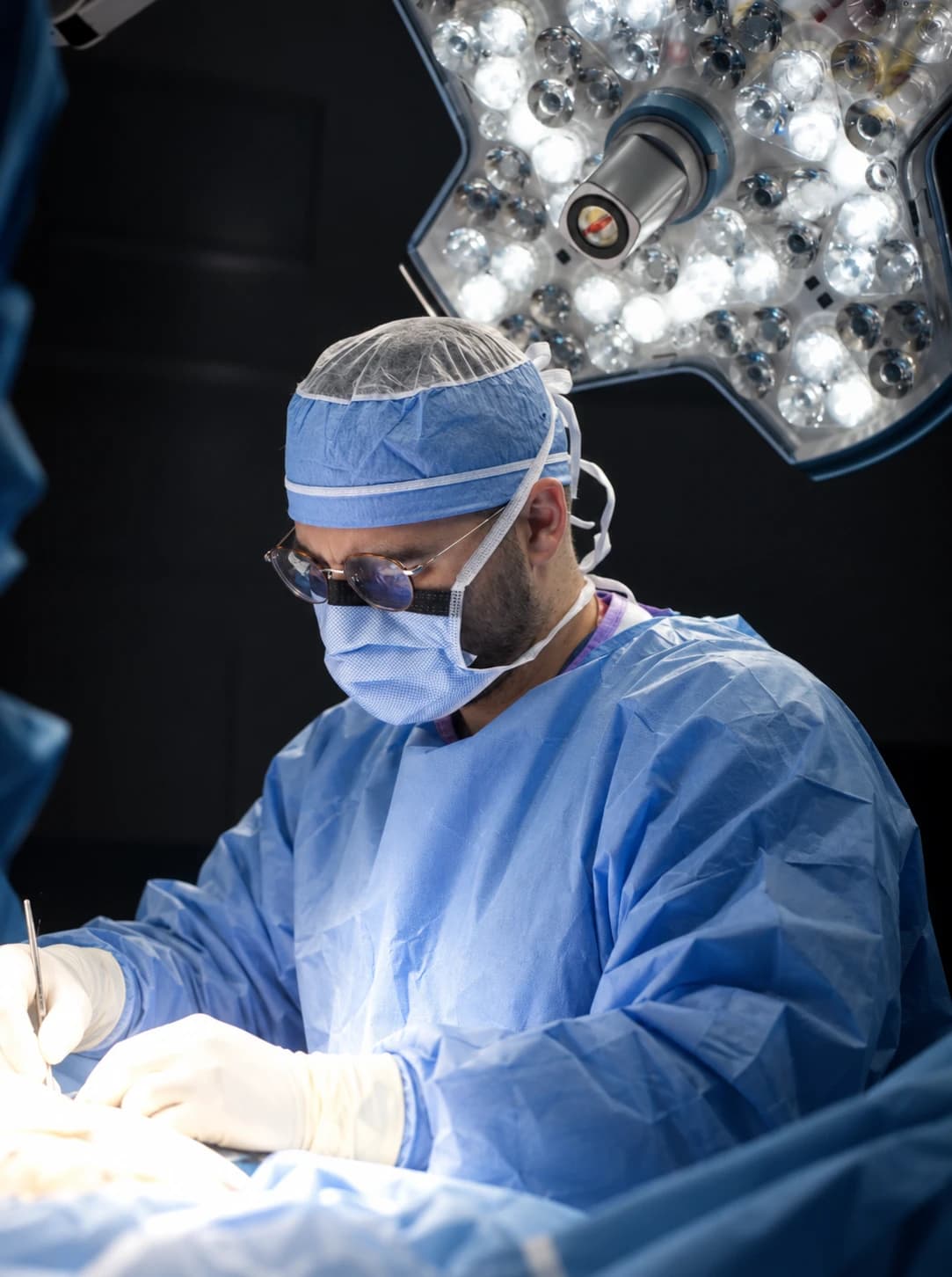
Reviewing surgeon
Foot and Ankle Surgeon at Center for Lower Extremity Surgery, a specialty practice of Ozturk Foot & Ankle. Dr. Ozturk is double board certified, as a Diplomate of the American Board of Podiatric Medicine (DABPM) and a Fellow of the Academy of Physicians in Wound Healing (FAPWH), and is a Fellow of the American Society of Podiatric Surgeons (FASPS) and the American Society of Podiatric Medicine (FASPM).
References
- 1.American Academy of Orthopaedic Surgeons. Plantar Fasciitis and Bone Spurs. OrthoInfo. orthoinfo.org (external site)
- 2.Tu P. Heel Pain: Diagnosis and Management. Am Fam Physician. 2018;97(2):86-93. PubMed 29365222 (external site)
- 3.Thomas JL, Christensen JC, Kravitz SR, Mendicino RW, Schuberth JM, Vanore JV, et al. The diagnosis and treatment of heel pain: a clinical practice guideline-revision 2010. J Foot Ankle Surg. 2010;49(3 Suppl):S1-19. PubMed 20439021 (external site)
- 4.Morrissey D, Cotchett M, Said J'Bari A, Prior T, Griffiths IB, Rathleff MS, et al. Management of plantar heel pain: a best practice guide informed by a systematic review, expert clinical reasoning and patient values. Br J Sports Med. 2021;55(19):1106-1118. PubMed 33785535 (external site)
- 5.Whittaker GA, Munteanu SE, Menz HB, Tan JM, Rabusin CL, Landorf KB. Foot orthoses for plantar heel pain: a systematic review and meta-analysis. Br J Sports Med. 2018;52(5):322-328. PubMed 28935689 (external site)
- 6.Guimarães JS, Arcanjo FL, Leporace G, Metsavaht LF, Conceição CS, Moreno MVMG, et al. Effects of therapeutic interventions on pain due to plantar fasciitis: A systematic review and meta-analysis. Clin Rehabil. 2023;37(6):727-746. PubMed 36571559 (external site)
- 7.Whittaker GA, Munteanu SE, Menz HB, Bonanno DR, Gerrard JM, Landorf KB. Corticosteroid injection for plantar heel pain: a systematic review and meta-analysis. BMC Musculoskelet Disord. 2019;20(1):378. PubMed 31421688 (external site)
- 8.American College of Foot and Ankle Surgeons. Equinus. FootHealthFacts. foothealthfacts.org (external site)
- 9.Tan AKS, Lee DMX, Mai AS, Toh RX, Li ZX, Mohamed Buhary KS, et al. Comparative effectiveness of surgical interventions for recalcitrant plantar fasciitis: A systematic review and network meta-analysis. J Foot Ankle Surg. 2026. PubMed 42604712 (external site)
- 10.Pickin CC, Elmajee M, Aljawadi A, Fathalla I, Pillai A. Gastrocnemius Recession in Recalcitrant Plantar Fasciitis: A Systematic Review. J Foot Ankle Surg. 2022;61(2):396-400. PubMed 34838458 (external site)
- 11.Pérez González A, Sanz-Perez A, Moroni S, Razzano C, Vicente-Mampel J, Ferrer-Torregrosa J. Gastrocnemius Recession in Recalcitrant Plantar Fasciitis: A Systematic Review and Meta-Analysis of Randomized Controlled Trials. J Clin Med. 2026;15(2). PubMed 41598555 (external site)
- 12.Gianakos A, Yasui Y, Murawski CD, Kennedy JG. Effects of gastrocnemius recession on ankle motion, strength, and functional outcomes: a systematic review and national healthcare database analysis. Knee Surg Sports Traumatol Arthrosc. 2016;24(4):1355-64. PubMed 26685692 (external site)
- 13.Brandão RA, So E, Steriovski J, Hyer CF, Prissel MA. Outcomes and Incidence of Complications Following Endoscopic Gastrocnemius Recession: A Systematic Review. Foot Ankle Spec. 2021;14(1):55-63. PubMed 31928084 (external site)
This article is general health information and isn’t a substitute for advice from a clinician who knows your history. Read our medical disclaimer and how we review content.
Learn more about this
Condition
Heel pain and plantar fasciitis
Pain under the heel that is sharpest with the first steps after rest.
Treatment
Gastrocnemius recession
Lengthening a tight calf muscle so the ankle can bend upward, relieving strain on the heel, arch and forefoot.
Treatment
Non-surgical care
Footwear, inserts, exercise, medication, injections and shockwave: how conservative care works and when to reassess.
Diagnosis guide
Second opinions
When a second opinion is worth getting, when non-surgical care comes first, when surgery shouldn’t wait, and how to prepare.
Keep reading
Heel, arch and tendons
Achilles Tendon Rupture: Surgery or No Surgery?
Both paths can work. What the trials say about re-rupture, complications and rehabilitation, and how the choice is made for an individual person.
6 min read
Ankle
Ankle Sprain Not Healing? What Else It Could Be
Most sprains settle. When yours has not, the cause may be more than a stretched ligament. Here are the usual explanations and how they are sorted out.
6 min read
Before and after surgery
How to Prepare for Foot and Ankle Surgery: A Checklist
A practical checklist for the weeks before surgery: your health review, the risks you can change, setting up your home, and what to bring.
7 min read
On the Ozturk Foot & Ankle blog
General foot care and non-surgical basics, from our parent practice.