Turf Toe Surgery: When It’s Needed, Recovery Time and Return to Play
When a grade 3 turf toe tears the plate under the big-toe joint, surgery repairs it, and athletes returned to sport a median of about 15 weeks later. Who needs it, what it involves and how recovery goes.
Medically reviewed by Dr. Efe Ozturk · Last reviewed
Published 7 min read
Turf toe surgery is in the news. As of November 7, 2026, ESPN reports that Baltimore Ravens quarterback Tyler Huntley is out for the season with a turf toe injury of his right foot, and sources said tests showed he needs surgery.[5] He was hurt in the Week 8 loss at Buffalo, when Bills defensive tackle Ed Oliver twisted him to the ground after he had let go of the ball.[5,6] The Ravens placed him on injured reserve on Thursday, November 5.[7] NFL Network’s Ian Rapoport compared it with Joe Burrow’s turf toe surgery last year.[8]
Burrow, the Cincinnati Bengals quarterback, had surgery on September 19, 2025, after a toe injury that NFL Network reported was feared to be grade 3.[9,10] He missed nine games.[11] He returned on Thanksgiving, about 10 weeks after surgery, wearing a stiff cleat with a carbon-fiber plate and a custom insert.[9,12] We have no connection with these athletes or their teams and have not examined them. The research below describes groups, not any one player’s forecast.
When does turf toe need surgery?
A grade 3 turf toe means the plantar complex is completely torn. That complex is the plate, ligaments and tendon that hold the big-toe joint (the first metatarsophalangeal, or MTP, joint) in place.[2] Surgery is recommended for the larger grade 3 injuries, including:
- a severe tear of the plantar plate and capsule
- a sesamoid pulled back toward the heel, or a split or broken sesamoid whose pieces have separated
- an unstable joint that moves abnormally up and down
- a loose chip of bone or damaged cartilage inside the joint
- a new or worsening bunion after the injury, called a traumatic bunion
- symptoms that persist, or play that suffers, despite nonsurgical care[2,1]
In 161 MRI scans of big-toe joint injuries, tears of the plantar ligaments or the inner (medial) collateral ligament predicted surgery, as did playing college or professional sport.[13] Recent case series and systematic reviews encourage repairing a grade 3 turf toe as early as possible.[14]
Waiting has a cost. A missed or undertreated traumatic bunion can lead to ongoing pain, weaker performance, a worsening deformity and, over time, wear of the joint.[15] Long-term problems after turf toe include weak push-off, stiffness and a big toe that cocks upward.[2]
What happens during turf toe surgery?
The goal is to repair the torn tissue and restore the joint’s motion.[2] The main options are:
- Primary repair. The torn capsule and ligaments are sewn back together with permanent stitches.
- Plantar plate advancement. If the tissue can’t be sewn directly, the plate is pulled forward and fixed to bone through small tunnels or with suture anchors (tiny implants that hold stitches in bone).
- Added procedures. Depending on the injury, the surgeon may remove a damaged sesamoid or correct a bunion at the same time.[16]
A 2026 technique rebuilds the capsule with knotless anchors and strong suture tape, designed to hold the joint steady right away while allowing controlled early motion.[16]
Older tears can also be repaired arthroscopically, using a small camera, instead of through a wide incision on the sole. In the first 10 patients treated this way, all but one returned to their pre-injury level of activity within 6 months, and the median pain score was 0.[17] Which approach fits your toe is a decision for your surgeon.
How do athletes do after turf toe surgery?
- Football players. In 15 players at varsity high school level or higher, followed an average of 27.5 months after grade 3 repair, pain averaged 0.7 out of 10 at rest and 0.8 with activity, and the big toe bent upward an average of 42 degrees.[3]
- Elite athletes with a traumatic bunion. Of 19 athletes, 12 of them in the NFL, 74% returned to their pre-injury level of play, at an average of 3.4 months.[15]
- NFL performance. In 24 NFL players with turf toe from 2010 to 2015, three of whom needed season-ending surgery, performance one and two years later was similar to that of uninjured players.[18] In 71 NFL turf toe injuries from 2011 to 2014, the performance ratings of injured offensive skill players did not differ significantly from before the injury or from uninjured players.[19]
Turf toe surgery recovery time
| Who was studied | Time back |
|---|---|
| Rehabilitation plans after surgery | Four phases, lasting up to 20 weeks |
| Athletes treated with surgery, 12 studies | Median 14.7 weeks to return to sport |
| All grade 3 turf toes in that review | 16.5 weeks |
| 15 football players after grade 3 repair | 16.5 weeks of playing time missed |
| 19 elite athletes after traumatic bunion repair | About 3.4 months on average |
| 10 patients after arthroscopic repair of older tears | 9 of 10 back to their prior level within 6 months |
Sources: a rehabilitation review, a return-to-sport review and three surgical series.[20,4,3,15,17]
A complete rupture needs at least 10 to 16 weeks to recover.[21] Whatever the grade, rehabilitation guided by a physical therapist or athletic trainer is critical to a full recovery.[22] See recovery after foot and ankle surgery.
Why see a Foot and Ankle Surgeon early?
Turf toe injuries that are treated early typically heal fairly well.[2] The exam compares the joint’s motion and stability with the other big toe. X-rays look for small pull-off fractures and sesamoids that have moved, and MRI can help with grade 2 and 3 injuries.[2] X-ray and ultrasound are available on site at our practice; see foot and ankle imaging.
When a late injury has already worn the joint, a fusion of the big-toe joint should be considered to reduce pain and improve function.[14] See hallux rigidus surgery. A similar plate sits under each smaller toe; see plantar plate tears.
What are the limits?
The evidence is small. A systematic review found only 8 studies with 16 turf toes, all of low quality, and no evidence-based treatment guideline; limited upward motion of the toe was the most common complication.[23] One in four athletes with a traumatic bunion could not return to play.[15] In another series, 4 of 14 athletes who had surgery for grade 3 injuries did not get back to their previous activities.[24] About 70% of athletes with higher-grade injuries keep their level of performance, with or without surgery.[20] Return times after surgery ranged from 6 weeks to about 3 years.[4]
Common questions
How long is turf toe surgery recovery time?
Athletes returned to sport a median of 14.7 weeks after surgery, and rehabilitation plans run up to 20 weeks.[4,20]
When does turf toe need surgery?
When the plantar complex is badly torn, a sesamoid is pulled back or split apart, the joint is unstable, a loose chip or cartilage damage is present, a bunion forms, or nonsurgical care fails.[2,1]
Can a grade 3 turf toe heal without surgery?
Many grade 3 injuries are first treated in a boot or cast for several weeks.[2] When the tear is large or the joint is unstable, surgery is recommended, and recent reviews favor repairing it early.[2,14]
Did Joe Burrow have turf toe surgery?
Yes. He had surgery on September 19, 2025, and returned on Thanksgiving that year.[9,12] It is not a forecast for anyone else.
The bottom line
A grade 3 turf toe is a complete tear, and repair can restore a stable, working big toe.[3] Dr. Ozturk is a double board certified Foot and Ankle Surgeon and podiatrist who sees patients in Lyndhurst, Paramus and Millburn. Our parent practice explains turf toe grades and return to play (external site) and foot and ankle sports medicine (external site), or you can request an appointment.
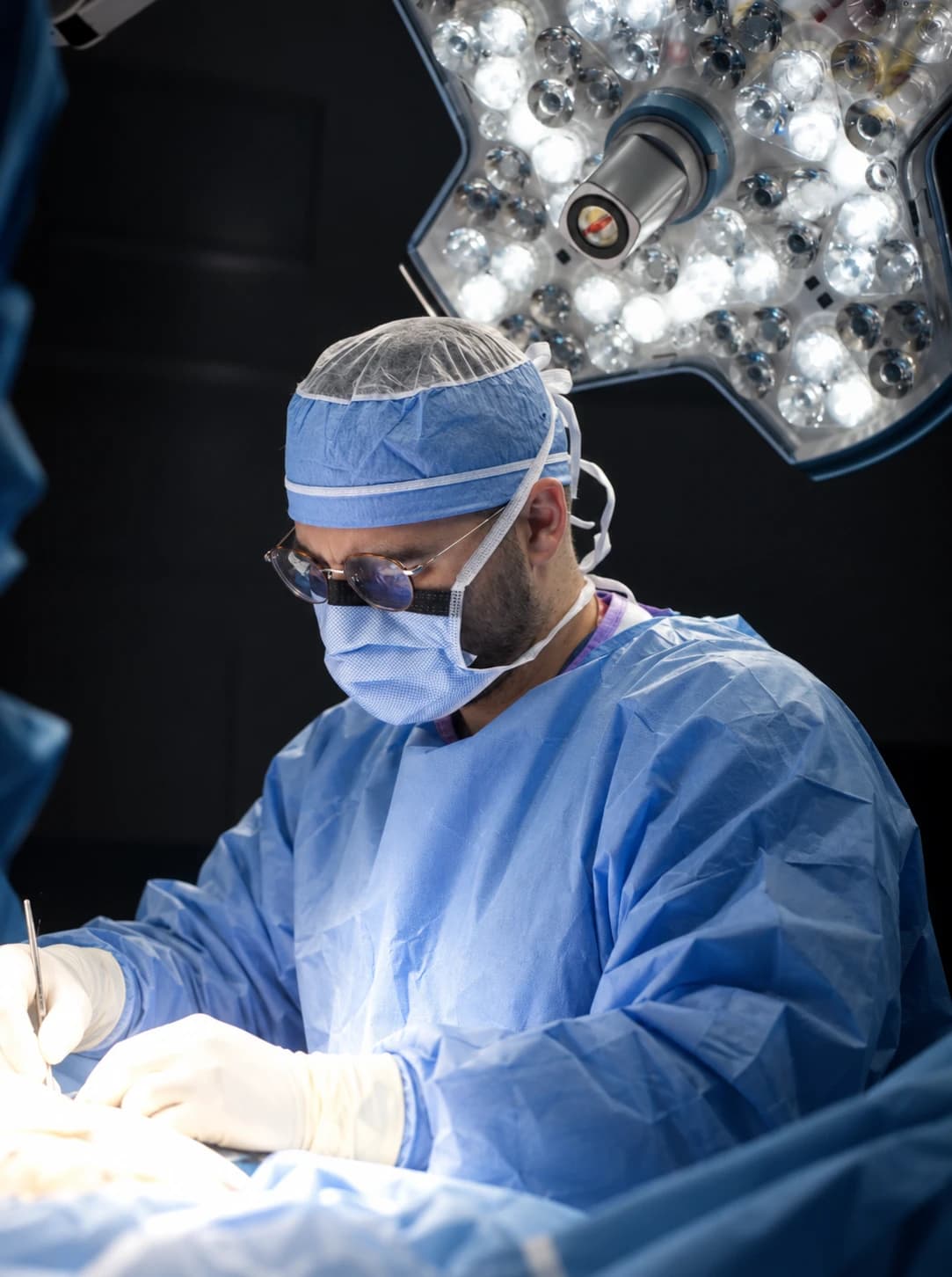
Reviewing surgeon
Foot and Ankle Surgeon at Center for Lower Extremity Surgery, a specialty practice of Ozturk Foot & Ankle. Dr. Ozturk is double board certified, as a Diplomate of the American Board of Podiatric Medicine (DABPM) and a Fellow of the Academy of Physicians in Wound Healing (FAPWH), and is a Fellow of the American Society of Podiatric Surgeons (FASPS) and the American Society of Podiatric Medicine (FASPM).
References
- 1.Mason LW, Molloy AP. Turf Toe and Disorders of the Sesamoid Complex. Clin Sports Med. 2015;34(4):725-739. PubMed 26409592 (external site)
- 2.American Academy of Orthopaedic Surgeons. Turf Toe. OrthoInfo. orthoinfo.org (external site)
- 3.Smith K, Waldrop N. Operative Outcomes of Grade 3 Turf Toe Injuries in Competitive Football Players. Foot Ankle Int. 2018;39(9):1076-1081. PubMed 29909648 (external site)
- 4.Vopat ML, Hassan M, Poppe T, et al. Return to Sport After Turf Toe Injuries: A Systematic Review and Meta-analysis. Orthop J Sports Med. 2019;7(10):2325967119875133. PubMed 31663005 (external site)
- 5.ESPN. Sources: Ravens QB Tyler ‘Snoop’ Huntley out for season. Published November 4, 2026. espn.com (external site)
- 6.NFL.com. Report: Ravens QB Tyler Huntley out for season with turf toe injury. Published November 4, 2026. nfl.com (external site)
- 7.Mink R. Ravens Place Lamar Jackson and Tyler Huntley on Injured Reserve. BaltimoreRavens.com. Published November 5, 2026. baltimoreravens.com (external site)
- 8.Rapoport I. Ravens QB Tyler “Snoop” Huntley suffered a season-ending turf toe injury (post). ESPN. Published November 4, 2026. espn.com (external site)
- 9.Nagel C. Joe Burrow injury update: Bengals QB undergoes surgery on toe, expected to miss at least three months. CBS Sports. Published September 19, 2025. cbssports.com (external site)
- 10.NFL.com. Bengals QB Joe Burrow (turf toe) to undergo surgery, out at least three months. Published September 15, 2025. nfl.com (external site)
- 11.theScore. Burrow expected to return vs. Ravens on Thursday. Published November 24, 2025. thescore.com (external site)
- 12.NFL.com. Joe Burrow aims to push Bengals into playoff race with help of reinforced cleat. Published December 4, 2025. nfl.com (external site)
- 13.Edwards CR, Ahmad ZY, Vosseller JT, Moy MP, Wong TT. First MTP joint injuries: MR imaging findings in surgically managed patients. Skeletal Radiol. 2023;52(9):1729-1738. PubMed 37043019 (external site)
- 14.Kadakia AR, Alshouli MT, Barbosa MP, Briggs D, Mutawakkil M. Turf Toe, Traumatic Hallux Valgus, and Hallux Rigidus: What Can I Do After an Metatarsophalangeal Fusion? Clin Sports Med. 2020;39(4):801-818. PubMed 32892968 (external site)
- 15.Covell DJ, Lareau CR, Anderson RB. Operative Treatment of Traumatic Hallux Valgus in Elite Athletes. Foot Ankle Int. 2017;38(6):590-595. PubMed 28335617 (external site)
- 16.Pappa NK, Haritos C, Ardavanis KS, Eckel T, Martin KD. All-Suture Fixation for Acute Turf Toe Injuries. JBJS Essent Surg Tech. 2026;16(4):e26.00003. PubMed 42890921 (external site)
- 17.Husebye EE, Stødle AH. Arthroscopic Repair of Chronic Plantar Plate Tears of the First Metatarsophalangeal Joint: A New Surgical Technique With Patient Outcomes. Orthop J Sports Med. 2022;10(12):23259671221137558. PubMed 36582934 (external site)
- 18.Tran A, Kappa J, Smith E, et al. The Effect of Turf Toe Injuries on Player Performance in the National Football League. Iowa Orthop J. 2019;39(2):35-39. PubMed 32577105 (external site)
- 19.Madi NS, Parekh TJ, Parekh SG. Outcome of Turf Toe Injuries in NFL Players. J Foot Ankle Surg. 2023;62(1):115-119. PubMed 35697653 (external site)
- 20.Gupta A, Singh PK, Xu AL, Bronheim RS, McDaniel CM, Aiyer AA. Turf Toe Injuries in the Athlete: an Updated Review of Treatment Options, Rehabilitation Protocols, and Return-to-Play Outcomes. Curr Rev Musculoskelet Med. 2023;16(11):563-574. PubMed 37789169 (external site)
- 21.McCormick JJ, Anderson RB. Turf toe: anatomy, diagnosis, and treatment. Sports Health. 2010;2(6):487-494. PubMed 23015979 (external site)
- 22.McCormick JJ, Anderson RB. Rehabilitation following turf toe injury and plantar plate repair. Clin Sports Med. 2010;29(2):313-323. PubMed 20226323 (external site)
- 23.Seow D, Tengku Yusof TNB, Yasui Y, Shimozono Y, Kennedy JG. Treatment Options for Turf Toe: A Systematic Review. J Foot Ankle Surg. 2020;59(1):112-116. PubMed 31882133 (external site)
- 24.Nery C, Fonseca LF, Gonçalves JP, et al. First MTP joint instability: Expanding the concept of “Turf-toe” injuries. Foot Ankle Surg. 2020;26(1):47-53. PubMed 30509556 (external site)
This article is general health information and isn’t a substitute for advice from a clinician who knows your history. Read our medical disclaimer and how we review content.
Learn more about this
Condition
Ball-of-foot pain and plantar plate tears
Pain under the ball of the foot from a torn or stretched ligament under a lesser toe joint, sometimes with a drifting toe.
Condition
Big-toe arthritis
Arthritis of the big toe joint that causes pain, stiffness and a bony bump on top of the joint.
Treatment
Big-toe arthritis surgery
Operations for arthritis of the big toe joint, from removing bone spurs to fusing or replacing the joint.
Treatment
Recovery after surgery
Weight-bearing, swelling, timelines by operation, driving, work and the warning signs to watch for.
Keep reading
Before and after surgery
How to Prepare for Foot and Ankle Surgery: A Checklist
A practical checklist for the weeks before surgery: your health review, the risks you can change, setting up your home, and what to bring.
7 min read
Before and after surgery
When Can I Drive After Foot or Ankle Surgery?
The answer depends on which foot was operated on, what you are wearing and what you are taking. What research on braking shows, and how to decide.
6 min read
Toes and forefoot
Bunion Surgery Recovery: A Realistic Timeline
Recovery is measured in weeks to months, and it depends on the operation. A stage-by-stage look at what to expect and why plans differ.
6 min read
On the Ozturk Foot & Ankle blog
General foot care and non-surgical basics, from our parent practice.